Explore Chinese Snuff Bottles from the Estate of Dr. Thomas Klein Part II at Freeman’s

Freeman's_OnlineSnuff

A Chinese Interior-Painted Glass Snuff Bottle, Ma Shaoxuan, Qing Dynasty, Late 19th-early 20th c., 清晚期 馬少宣作玻璃內畫稚犬圖配詩文鼻煙壺, Lot 1, Estimate $1,500 – $2,000Chinese Snuff Bottles from the Estate of Dr. Thomas Klein Sale

Chinese Snuff Bottles from the Estate of Dr. Thomas Klein Part II
Auction: Thursday, October 8, 2026 at 10am EDT
Previews in Philadelphia: By Appointment
Online

After the highly successful white-glove auction of Chinese Snuff Bottles from the estate of Dr. Thomas Klein in New York City last month, Freeman’s is pleased to present the remainder of Dr. Klein’s collection in this online auction ending October 8, sold to benefit the Obstetrics Department at the University of Pennsylvania.

Dr. Klein assembled a fine group of snuff bottles spanning many categories and materials, and they are delighted to offer these at no reserve to collectors both new to the field and also to more seasoned connoisseurs. The bottles range from puddingstone and jadeite to interior painted and carved overlay glass examples, many with provenances from well-known collections and auction sales.

The bottles in this sale will be available for viewing in Philadelphia by appointment.

To learn more, click here.

• • •

Last Days of Meritorious Men and Virtuous Women: Five Important Eighteenth-Century Korean Paintings at Sebastian Izzard Asian Art

Izzard_Artist-Unknown

Artist Unknown, Portrait of Yi Jeongbo at his 60th Birthday Party, Korea, Joseon Dynasty (1392−1910), 18th c., ink, color, and gold pigment on silk, painting: 39½ x 21½ in. (100.3 x 54.6 cm), inscription signed by Yi Jeongsong (1692−1759), dated 1753, late Fall

Meritorious Men and Virtuous Women: Five Important Eighteenth-Century Korean Paintings
Closing Friday, October 9, 2026
17 East 76th Street, 3rd Floor

Special Exhibition Hours: Mon–Fri, 11am-5pm or by appointment

Sebastian Izzard LLC Asian Art is pleased to present Meritorious Men and Virtuous Women: Five Important Eighteenth-Century Korean Paintings, featuring a small group of rare figure paintings from the late Joseon dynasty. A tradition of commemorative portraits of celebrated scholar-bureaucrats became a part of the court’s artistic production, where painters in the Joseon royal painting bureau were commissioned to paint portraits of elite men. Women were rarely the subject of figurative paintings and portraits, with a few select exceptions. For the most part, upper-class women are not depicted in Joseon dynasty paintings in accordance with period standards of propriety where the domestic lives of respectable women were kept private.

The coincidental acquisition of two fine works, a single portrait of a member of the scholarly elite, and a set of four paintings of virtuous women, have been brought together for the present exhibition. The Portrait of Yi Jeongbo at his 60th Birthday Party and the Four Paintings of Virtuous Women by Jang Shiheung together reflect the societal ideals of the Joseon dynasty. Mothers and wives, young and old, worked together to support the men of the family and raise sons to continue the patrilineal family line so that one day they could become accomplished men, such as Yi Jeongbo. The large scale of the paintings of women contrasts with the privacy of the domestic scenes that are usually shielded from public. However, the plentiful use of colorful pigment and accents of gold speak to the importance of these paintings, which captured the model behavior of upper-class women that served to support the public lives of upper-class men as scholar-officials and patriarchs and uphold Neo-Confucian patrilineal values.

The exhibition will be accompanied by a fully illustrated catalogue.

To learn more, click here.

• • •

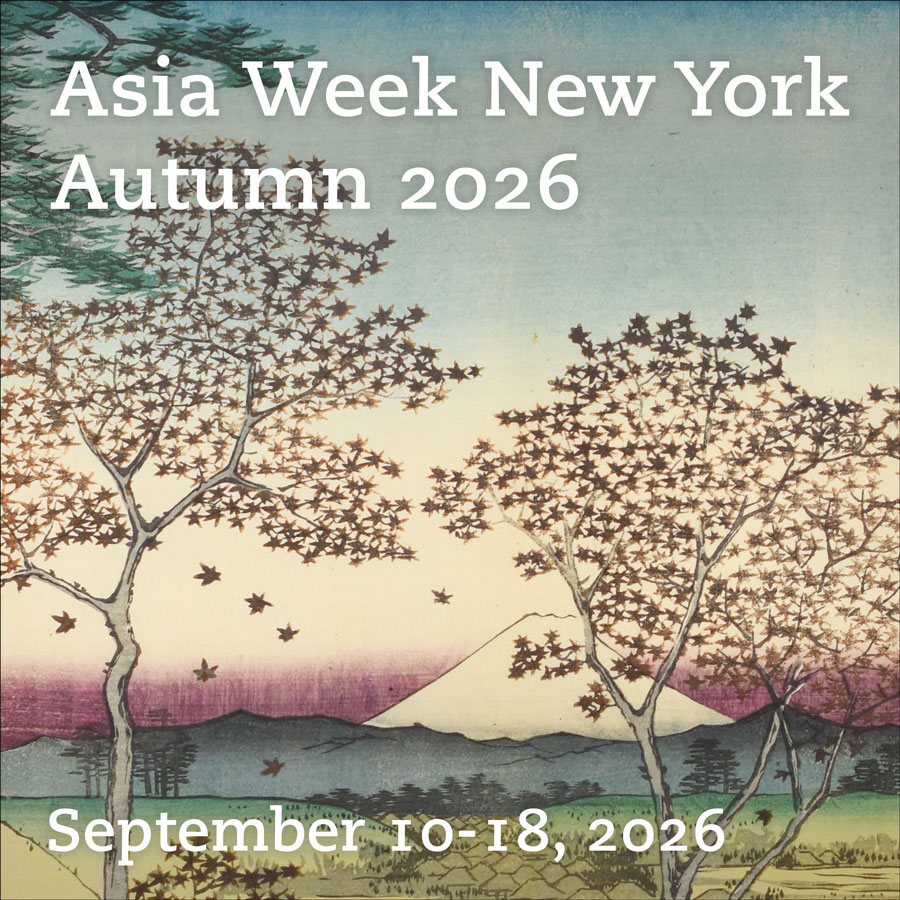
A Season of Highlights: AWNY Autumn 2026

Autumn2026Summary

Utagawa Hiroshige, Twilight Hill at Meguro (Tôto Meguro yûhi no kei) (detail), Series: Thirty-six Views of Mt Fuji (Fuji sanjûrokkei), 1858, color woodblock print

Our nine-day Autumn edition brought together 18 distinguished galleries and six leading auction houses, presenting a vibrant array of exhibitions, auctions, and programs both in person and online. From Japanese woodblock prints and ceramics to Chinese paintings, Korean art, and South Asian modernism, the season offered collectors and audiences an expansive look at the breadth and diversity of Asian art today. We’re delighted to share a selection of highlights from our member dealers and auction houses, celebrating standout sales, exhibitions, and memorable moments from Asia Week New York Autumn 2026!

DaiIchi_SoldRemnants
Kiyomizu Rokubey VIII 八代 清水六兵衞, Remnants of Heat 26-F, 熱の痕跡, 2026, artist’s mark impressed on base, stoneware, 9 × 9 × 9 in. (22.5 × 23 × 23 cm)

Dai Ichi Arts, Ltd. was pleased to present Kiyomizu Rokubey: 250 Years of Ceramic Expression from Kyoto, a landmark exhibition celebrating eight generations of artistic expression from one of Kyoto’s most distinguished ceramic families. Featuring works from the 4th through 8th generations, the exhibition traced more than two centuries of innovation and offered a rare opportunity to encounter the Kiyomizu dynasty in New York. Kiyomizu Rokubey VIII attended the opening reception, adding a special dimension to the occasion. Among the standout works sold was his Remnants of Heat 26-F, 熱の痕跡 exemplifying his radical approach to clay and the vessel form through geometric abstraction, hollow interiors, and planes of negative space.

Ippodo_highlight
Kaori Someya, Pictures of Seasonal Changes in Dress 四季遷衣図(しきせんいず), 2026, pair of two-panel folding screens: gold leaf, silver leaf, mineral pigments, dye, washi paper, and animal glue, H70 7/8 x W141 3/4 x D3/4 in. overall (H180 x W360 x D2 cm overall)

Ippodo Gallery’s exhibition of Kaori Someya’s work at Ippodo Gallery opened with great enthusiasm, attracting a strong flow of visitors who showed considerable interest in her contemporary approach to Nihonga. Guests have been particularly fascinated by the distinctive combination of traditional Japanese techniques and a contemporary conceptual approach. With Someya in New York through early October, guests have enjoyed the rare opportunity to meet the artist and learn more about her creative process firsthand. The exhibition has also generated strong sales and attracted new clients, reflecting the growing attention the exhibition is receiving. The recent Artist Talk drew an enthusiastic audience, offering further insight into Someya’s artistic practice.

Mirviss_SoldIguchi
IGUCHI DAISUKE (b. 1975), Ash-coated vessel with silver slip, 2026, glazed stoneware, 12 1/2 x 12 1/2 x 9 3/4 in. Courtesy Joan B Mirviss LTD, Photography by Richard P. Goodbody

Joan B Mirviss LTD presented Patina of Time: The Clay Art of Iguchi Daisuke, a long-anticipated solo exhibition featuring a new body of 29 works that explore the passage of time. In addition to being on view in the gallery, the exhibition was also presented online, complete with a digital catalog, which garnered attention from collectors outside of the New York area. The online presentation in particular attracted interest from new collectors, many of whom ultimately acquired a work. The many pathways of engagement generated the kind of enthusiastic response that they’ve come to expect from Asia Week, and it translated into a substantial number of sales. As of Friday, September 25, 22 of the 29 total works have found new homes, with one destined for a prominent East Coast institution with a well-established collecting interest in East Asian art.

Onishi_12.-Ohi_Ceremonial-Vessel,-2025
Ōhi Toshio Chōzaemon XI, Ōhi Ceremonial Vessel, 2025, stoneware, 9 ½ × 14 × 7 in. (24 × 35.5 × 17.8 cm)

Onishi Gallery was pleased to place several works from their recent exhibition, Across the Sea: Onishi Gallery with Homo Faber, including Ōhi Toshio Chōzaemon XI’s distinctive Ōhi Ceremonial Vessel and Onihira Keiji’s Maki-e Box “Ōmurasaki Between Sun and Shade.” The exhibition brought together works by ten artists, four of whom also participated in the 2026 edition of Homo Faber in Venice, highlighting the dynamic interplay between traditional craftsmanship, innovation, and contemporary artistic practice.

Scholten_SoldHasui
Kawase Hasui (1883-1957), Selection of Scenes from Japan: No. 12, Goryo, Amakusa, 1922, woodblock print, 12 1/8 by 8 7/8 in. (30.8 by 22.6 cm)

Scholten Japanese Art was fortunate to have a lovely ‘capsule collection’ of modern Japanese woodblock prints which had been tucked away in a closet on the Upper West Side since the early 1980s. It was a delight to represent, and buyers were quick to make up their minds. It was probably the fastest-selling collection they have ever handled. The first print to sell from the group was a very early and extremely rare Hasui from 1922, which was deftly nabbed by a new but prescient collector who happened to visit the gallery just as they were preparing the exhibition.

Thomsen_SoldFallShow
Kikuchi Keigetsu (1879–1955), Chinese Beauty in a Garden, 1920s, Japan, hanging scroll; ink, mineral colors, shell powder and gold on silk, overall size: 92½ x 25½ in.

Thomsen Gallery recorded a notable sale this season with Kikuchi Keigetsu’s (1879–1955) Chinese Beauty in a Garden, an important 1920s scroll painting by one of the leading Japanese painters of his generation. Featured in Japanese Masterpieces: 17th–21st Centuries, the painting was part of an exceptional selection spanning four centuries of Japanese fine art, from hanging scrolls by prominent Taishō and early Shōwa-era painters to exquisite ikebana baskets and contemporary bronzes.

Zetterquist_SoldJizhou-Tea-Bowl-(L)
Jizhou Conical Tea Bowl with Paper-cut Phoenix Decoration​, Southern Song Dynasty, 1127-1279 AD, China, diameter: 15.2 cm

Zetterquist Galleries‘ ongoing exhibition, Chinese and Japanese Ceramics; Featuring Modern Japanese Ceramics from 1930’s – 1990’s, was well-received during September Asia Week and they look forward to welcoming more visitors throughout the fall by appointment. This Southern Song Dynasty Jizhou Tea Bowl with Phoenix Design cut-out pattern, was of particular interest, as a similar piece recently sold in the Sothebys Okada Museum auction for over HK$10 million.

Our auction house members enjoyed a dynamic Autumn season as well, with strong results across a diverse range of sales and several new records set, underscoring continued enthusiasm for Asian art among collectors. Below are a few highlights from our member auction houses:

Bonhams_Sept2026Chinese
A Magnificent Gilt-Copper-Alloy Glass-Embellished Elephant Stand, Qianlong/Jiaqing period. Sold for $610,100

Bonhams September Asia Week New York at its U.S. flagship galleries at 111 West 57th Street brought together collectors from across the globe, with three live auctions and two online sales realising a combined total of US$5.74 million. The series featured notable results across Chinese, Japanese, and Korean art, highlighting the breadth of material offered and the enduring appeal of works representing Asia’s rich cultural heritage. Leading the sale week was a Magnificent Gilt-Copper-Alloy Glass-Embellished Elephant Stand, Qianlong/Jiaqing period, which after spirited bidding, exceeded its estimate over four-fold, when it sold for $610,100.

To read the full press release and view all the top lots, click here.
Christie's-Results
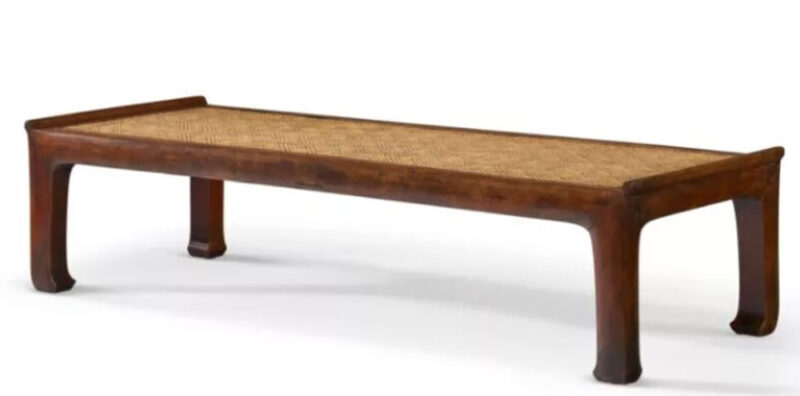
A Very Rare Waistless Huanghuali Daybed, 17th century. Price realized: $3,170,000

Christie’s September Asian Art Week totaled $58,079,952 over four live and two online auctions that together offered 947 lots, selling 91 percent of those lots for more than 2.6 times the combined low estimate. In a sign of the international strength of this category, 46 percent of buyers were from North America and 39 percent from Asia. This September marks yet another season in which Christie’s achieved the best results at auction during a New York Asian Art Week. The top lot of the week at Christie’s was a very rare waistless Huanghualí Daybed, which sold for $3,170,616 in their Important Chinese Art sale. Among the season’s highlights, Hiroshige: Colors of the Four Seasons | The Alan Medaugh Collection totaled $6.99 million, with all 181 lots sold, while South Asian Modern + Contemporary reached $22.57 million, selling every lot and setting eight world records.

To read the full press release and view all the top lots, click here.

Doyle_Sept2026
Left: An Exceptionally Rare Chinese Yellow Ground and Underglaze Blue Porcelain Moon Flask, Baoyueping; Property from the Collection of a Distinguished Family from Westchester. Sold for $121,150. Right: A Chinese Ming-Style Blue and White Porcelain Moon Flask, Bianhu,; Property from the Estate of an Elegant Lady. Sold for $83,050

Doyle’s two-day Asian Works of Art sale on September 16–17, 2026 attracted bidders from around the globe and delivered outstanding results. The sale showcased a wide range of porcelain and ceramics, bronzes, jades, snuff bottles, scholar’s objects, furniture, paintings and other traditional arts representing centuries of East and South Asian history and culture. Among the highlights were two exceptional Chinese porcelain moon flasks distinguished by their sophisticated decoration and imperial provenance. The rare Yongzheng-period yellow-ground and underglaze blue moon flask from the Collection of a Distinguished Family from Westchester featured lotus, peony and chrysanthemum blossoms painted in the Ming “heaped and piled” style, with a subtle three-dimensional effect. Determined bidders sent the moon flask soaring over its $15,000-20,000 estimate to achieve $121,150. A Qianlong period blue and white moon flask decorated with the Eight Buddhist Emblems surrounded by lotus blossoms in vivid cobalt blue more than doubled its estimate $20,000-40,000 to realize $83,050. The sale also featured works from the Estate of Diane A. Nixon, with additional property to be offered in select auctions throughout the Fall season.

To read the full press release and view all the top lots, click here.

Freemans_AsianArtSept2026
A Magnificent, Monumental, and Extremely Rare Chinese Blue and White ‘Nine Dragons’ Vase, Qing Dynasty, Jiaqing/Daoguang Period, Lot 286. Sold for $1,036,800

Across back-to-back sales on September 17 and 18, Freeman’s saw $3.7 million worth of Asian Art sell in its New York saleroom, with both sales soaring past their presale estimates and highlighting a thriving auction market. Chinese Snuff Bottles from the Estate of Dr. Thomas Klein nearly quadrupled its presale estimate, achieving $687,168, with all 117 lots selling. Proceeds from the auction will benefit the Department of Obstetrics and Gynecology at Thomas Jefferson University Hospital in Philadelphia. 88 additional lots from the collection will be offered in an online auction closing October 8. Not to be outdone, Asian Works of Art on September 18 saw staggering results throughout the day, headlined by a magnificent, monumental, and extremely rare Chinese blue and white ‘Nine Dragons’ vase from the Qing Dynasty that sold for $1,036,800.

To read the full press release and view all the top lots, click here.


A Rare and Exceptional Chinese Molded Famille Rose Figure of the Arhat (Luohan) Rahula, 18th century. Sold for $300,000

Heritage Auctions’ September 16 Asian Art Signature® Auction delivered an impressive $1.07 million, with 211 of 237 lots sold and an 89% sell-through rate by lot. Leading the sale was a rare 18th-century Chinese imperial famille rose figure of the Arhat Rahula, which soared to $300,000 against a $40,000–60,000 estimate—more than five times the high estimate and the clear standout of the auction.
• • •

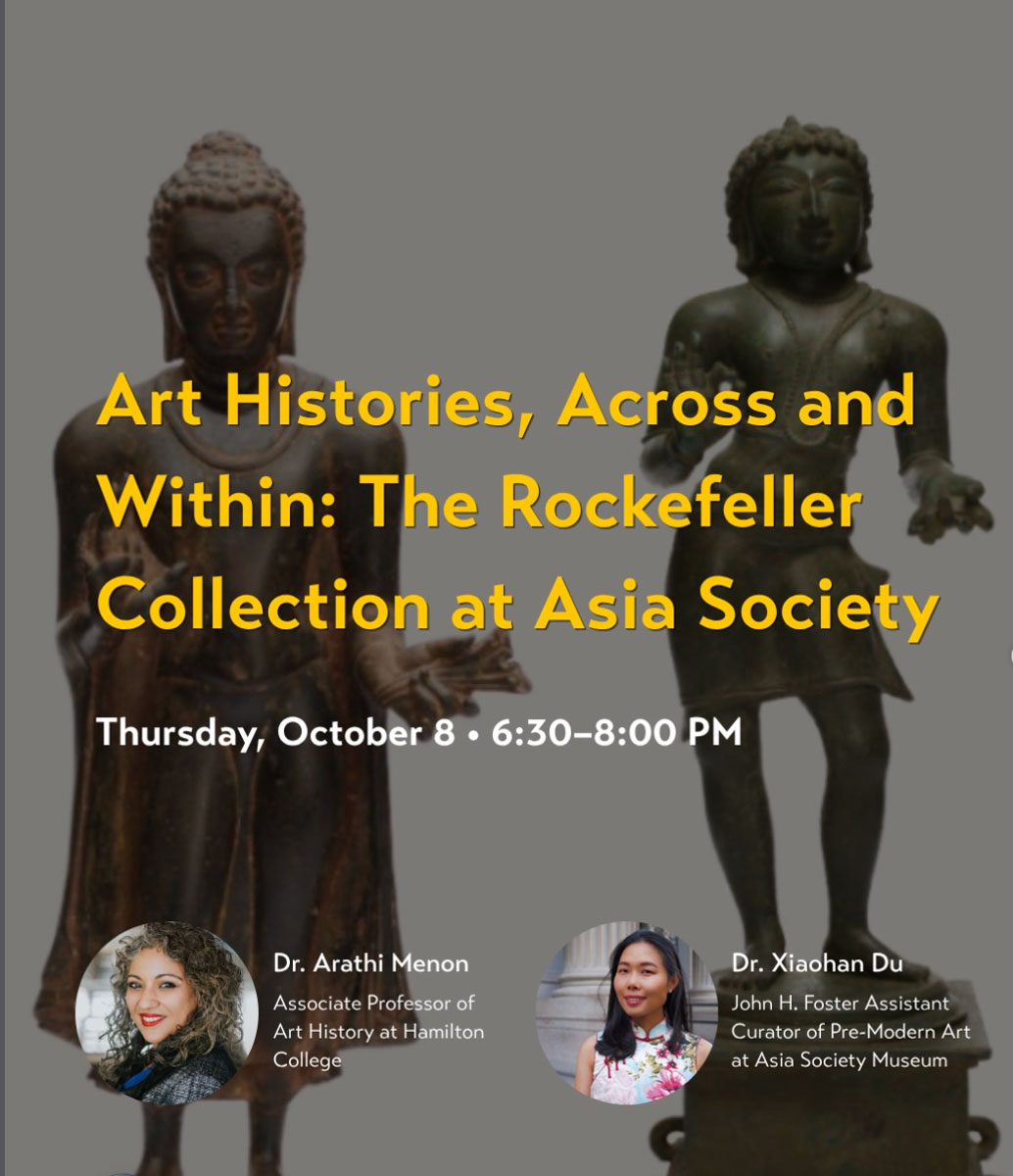
Art Histories, Across and Within: The Rockefeller Collection at Asia Society

AsiaWeekSalonTalk

Art Histories, Across and Within: The Rockefeller Collection at Asia Society
Museum Salon Series: Arathi Menon in conversation with Xiaohan Du
Thursday, October 8, 2026, 6:30-8pm
$15 Members | $25 Nonmembers | Discounted Students and Seniors

Join Asia Society on Thursday, October 8, for Art Histories, Across and Within: The Rockefeller Collection at Asia Society, an engaging conversation exploring how ideas, artistic traditions, and inspiration traveled across Asia long before today’s hyperconnected world. Drawing on works from the Mr. and Mrs. John D. Rockefeller 3rd Collection, featured in the current exhibition Buddha and Shiva, Lotus and Dragon—Celebrating 70 Years of Asia Society and the Rockefeller Legacy, the discussion considers these works as visual archives of the networks that connected people and cultures across the continent. Discover the fascinating stories of exchange, innovation, and human connection they reveal—and the many paths through which ideas traveled across the premodern world.

Speaker bios:

Arathi Menon is Associate Professor of Art History at Hamilton College. She is a specialist in the histories of South Asian art. Her research focuses on the material culture of the premodern Indian Ocean World, from the ancient through to the early modern periods.

Menon’s current book project, Building Cosmopolitanism: Hipped & Gabled Malabar, examines the art histories of the Malabar coast of southwestern India, where a particular convergence of sociocultural, economic, and political factors shaped the development of the region’s distinctive hipped and gabled architectural style. The book offers a new framework for understanding the medieval art and architectural history of Malabar’s churches, mosques, synagogues, and temples.

Menon teaches a range of courses in the department of Art History and in the Asian Studies and Middle East/Islamicate Worlds Studies programs. These include courses on the visual portrayal of stories, epics, and oral traditions, histories of architecture and sculpture, and archives of collecting, circulation, and exchange.

Xiaohan Du is the John H. Foster assistant curator of pre-modern Asian art at Asia Society Museum. Xiaohan received her PhD from Columbia University; in her dissertation she wrote about how calligraphy functioned as a visual and diplomatic currency in the life of a Chinese monk who emigrated to Japan in 1299.

To learn more and reserve tickets, click here.

• • •

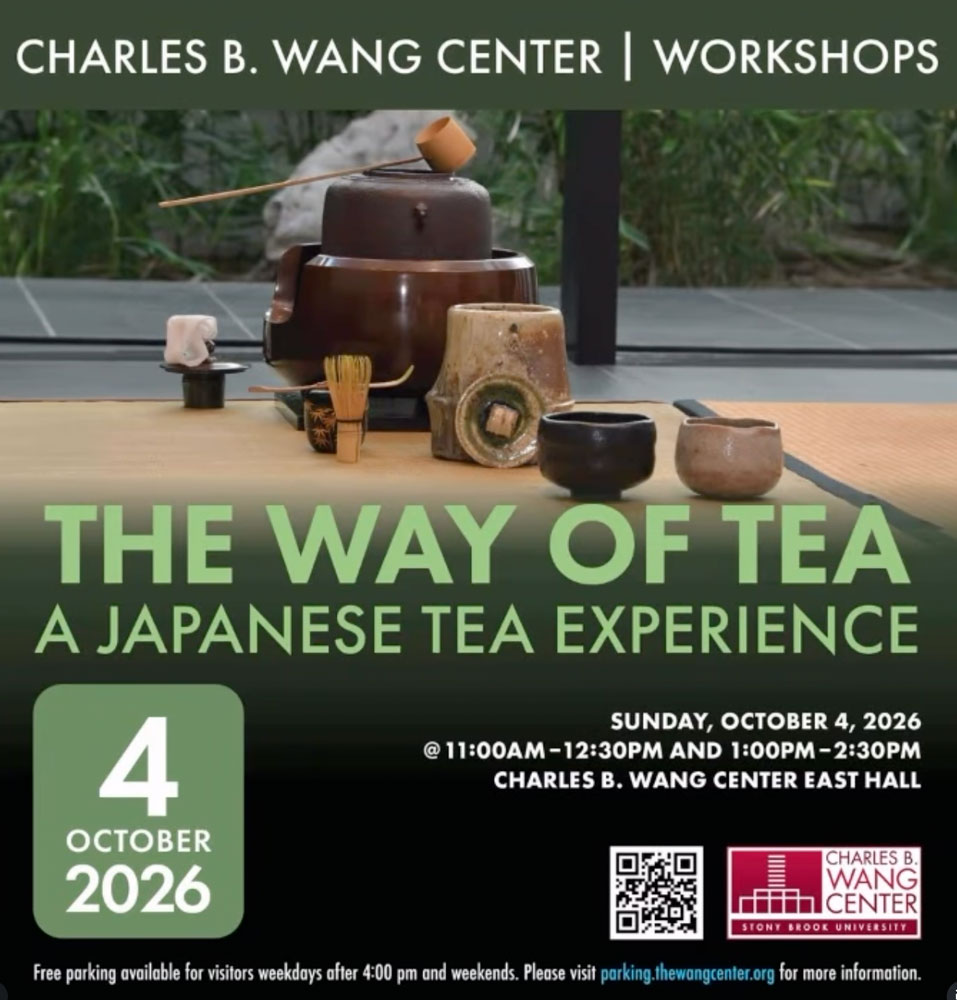
The Way of Tea: A Japanese Tea Experience at The Charles B. Wang Center

CharlesBWang_WayofTea

The Way of Tea: A Japanese Tea Experience
Sunday, October 4, 2026
Session 1: 11am-12:30pm  
Session 2: 1-2:30pm

Step into the world of Japanese tea at The Charles B. Wang Center on October 4. Experience the refined artistry of Japanese tea with the master tea instructor Yoshitsugu Nagano. This workshop introduces participants to the principles of harmony, respect, purity, and tranquility at the heart of Japanese tea culture. Through guided demonstrations and hands-on practice, attendees will learn essential techniques for preparing and appreciating high-quality Japanese tea. Whether you are new to Japanese tea traditions or seeking a deeper understanding, this session offers a serene and thoughtful immersion into a timeless cultural practice.

Yoshitsugu Nagano is a tea master and educator specializing in the 400-year-old Ueda Soko School of samurai tea ceremony. He is the youngest person to achieve the school’s highest level of certification and serves as an instructor of the tradition. Since moving to New York in 2019, he has actively shared the aesthetics, mindfulness, and philosophy of Japanese tea culture through demonstrations, workshops, and educational programs.

To learn more and purchase tickets, click here.

• • •

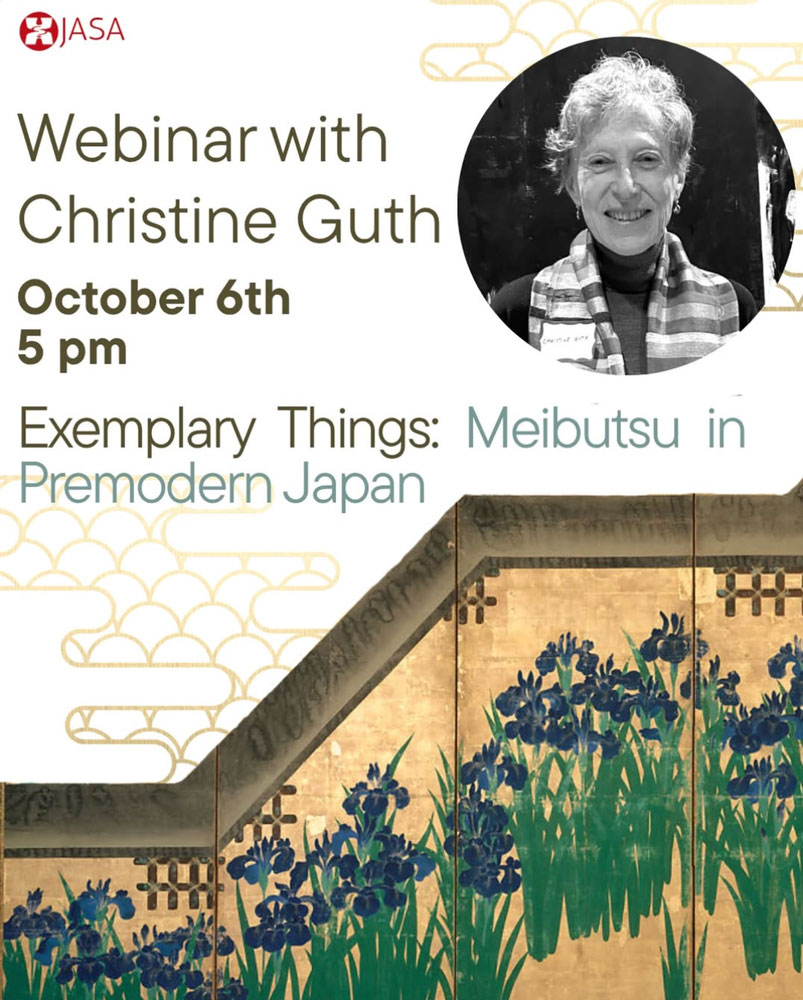
Unlocking the History of Meibutsu with JASA

JASA_webinaroc2026

Unlocking the History of Meibutsu
Tuesday, October 6, 2026 at 5pm EDT
Live Zoom Webinar

Join the Japanese Art Society of America for an upcoming Zoom webinar exploring the fascinating world of meibutsu, the celebrated “famous things” that have shaped the way objects are valued, remembered, and preserved in Japan. Art historian and scholar Christine Guth will draw on her recent book, Exemplary Things: Meibutsu in Premodern Japan, to trace the rich and multifaceted history of meibutsu and its important role in shaping the identification, classification, and preservation of Japanese cultural heritage.

Meibutsu is a Japanese cultural keyword—with no exact anglophone equivalent—that has had a pervasive and enduring influence in Japan. Literally meaning “famous thing” or “thing with a personal name,” it has served to designate articles of the highest quality, from utensils used in the tea ceremony, swords and incense, to regional crafts and foodstuffs. Initially, this honorific was applied to luxury goods imported from China collected by the elite but over time it became a branding device for domestic products, especially those available along the heavily traveled Tokaido Road linking Kyoto and Edo.

To register for this fascinating conversation, click here.

• • •

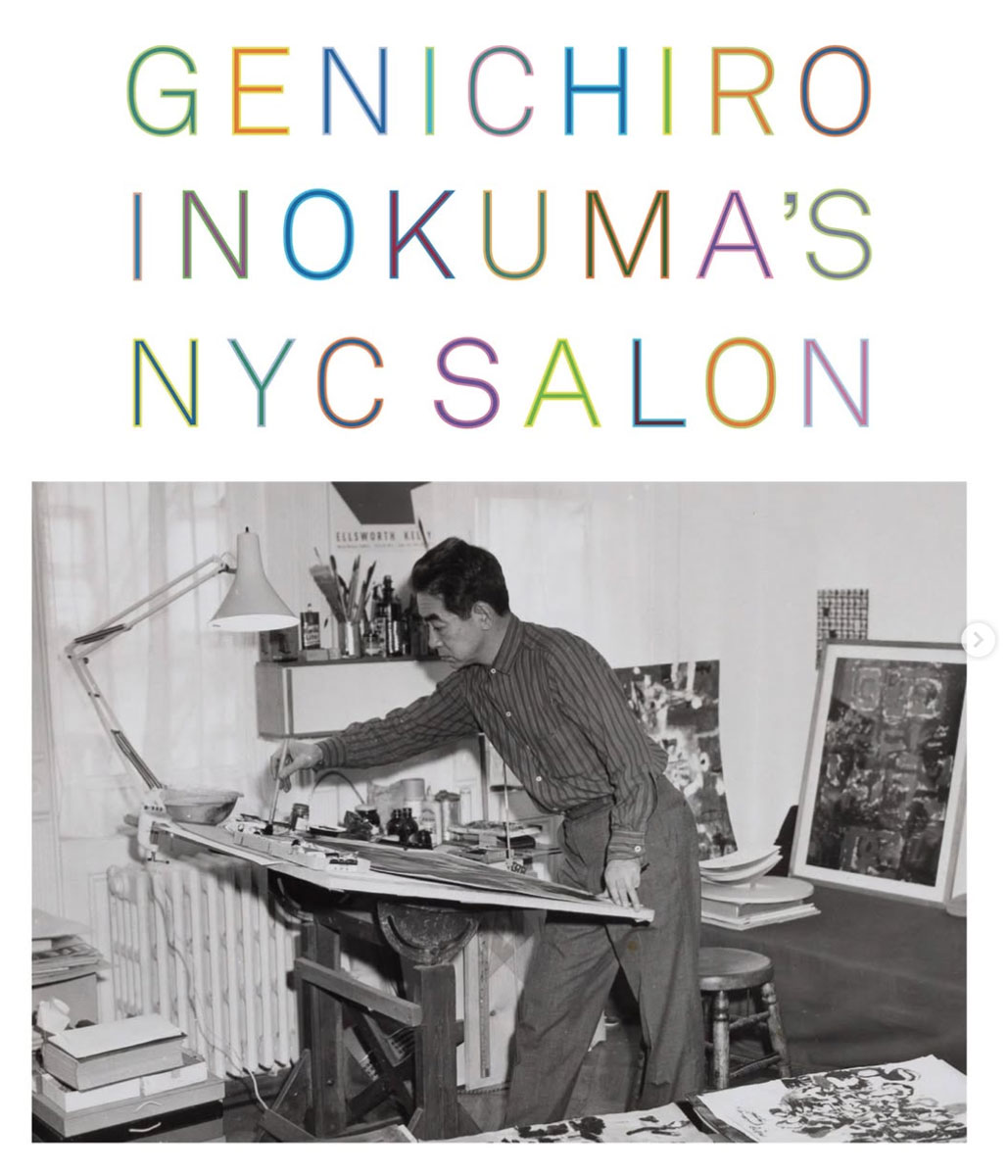
Encounter Gen’ichiro Inokuma’s NYC Salon at Japan Society

JapanSociety_Genichiro

Gen’ichirō Inokuma, Inokuma working in his studio at 115 East 95th Street, black and white photograph. Courtesy Marugame Genichiro-Inokuma Museum of Contemporary Art

Gen’ichiro Inokuma’s NYC Salon
October 6, 2026 — January 10, 2027
Special Opening Event: Gen’ichirō Inokuma’s NYC Salon Symposium, Tuesday, October 6 at 2 pm (RSVP required)
Opening Reception for Individual & Corporate Members: Tuesday, October 6 at 6pm (RSVP required)

Opening October 6 at Japan Society, Gen’ichiro Inokuma’s NYC Salon offers a rare opportunity to discover the vibrant New York chapter of Japanese modern artist Gen’ichiro Inokuma (1902–1993). Marking his first U.S. solo museum exhibition, the show brings together paintings, works on paper, and other multimedia works created during Inokuma’s twenty-year residence in New York City, from 1955 to 1975. Organized in collaboration with MIMOCA, the exhibition draws from collections in Japan Society and MIMOCA, alongside works from a recently discovered New York private collection.

Inokuma’s Manhattan sojourn was shaped by meaningful connections with the American avant-garde: Jasper Johns, Mark Rothko, Robert Rauschenberg, Alexander Calder, David Smith, Isamu Noguchi, Yoko Ono, John Cage, Merce Cunningham, and many others. Inokuma and his wife, Fumiko, also served as a social and cultural bridge between American and visiting Japanese artists and architects, often hosting gatherings at their New York apartments. The exhibition features photographs, film footage, and ephemera documenting these artistic interactions.

By illuminating Inokuma’s little-known role in postwar American art history, NYC Salon brings new insights into New York City’s mid-20th-century art world—both its collaborative artistic atmosphere, and its vibrant international social scene.

They look forward to welcoming you soon, and invite you to discover the full range of upcoming programs presented in conjunction with the exhibition.

To learn more, click here.

• • •

Travel to Japan with TAI Modern: A Journey Through Bamboo Art

TAIMODERN_japantrip

Bamboo Art Tour of Japan
March 28 – April 7, 2027

Join TAI Modern for a Spring 2027 Bamboo Art Tour of Japan! A few spots remain for this special journey designed especially for collectors and enthusiasts of Japanese bamboo art. Traveling from Tokyo through Tomonoura, Fukuyama, Kurashiki, Beppu, Osaka, and Kyoto, the tour offers unique access to artists, collections, and cultural experiences along the way.

At the heart of the tour are visits with some of Japan’s leading bamboo artists, offering a rare glimpse into their homes and studios and the opportunity to learn firsthand about their creative practices and the traditions behind their work. This spring, participants will be meeting with Kawano Shoko, Shono Tokuzo, Tanabe Chikuunsai IV, Monden Yuichi, Living National Treasure Kibe Seiho, and many more.

The itinerary also includes a rare private viewing of treasures from the Oita Prefectural Art Museum, along with opportunities to experience historic towns, temples, traditional crafts, hot springs, and exceptional dining. Together, these experiences offer a unique perspective on Japanese bamboo art and a side of Japan few visitors have the opportunity to discover.

Whether you are a longtime collector or a new admirer of Japanese bamboo art, TAI Modern warmly invites you to join this extraordinary spring journey. Registration closes Friday, October 23, 2026, and only a few spots remain—reserve your place today!

To view the details and itinerary, click here.

• • •

Discover Elegant Lifestyle at Lark Mason Associates

LarkMasonSept2026Sale

Chinese Cicada Carved Shoushan Seal, Guangxu Period, Qing Dynasty

Elegant Lifestyle: Jewelry, Asian and European Art
Through October 6, 2026
Online Sale

Explore Elegant Lifestyle, Lark Mason Associates current online auction featuring an exceptional selection of Asian art alongside fine jewelry, European art, and decorative works. With more than 300 lots, the sale offers a fascinating range of objects, from works of art and antiquity to exquisite examples of craftsmanship and design.

Browse the sale online through October 6 and discover something to inspire your next collection!

To learn more, click here.

• • •

Discover Meritorious Men and Virtuous Women: Five Important Eighteenth-Century Korean Paintings at Sebastian Izzard Asian Art

Izzard_Jang-Shiheung_Sept-2026_1200

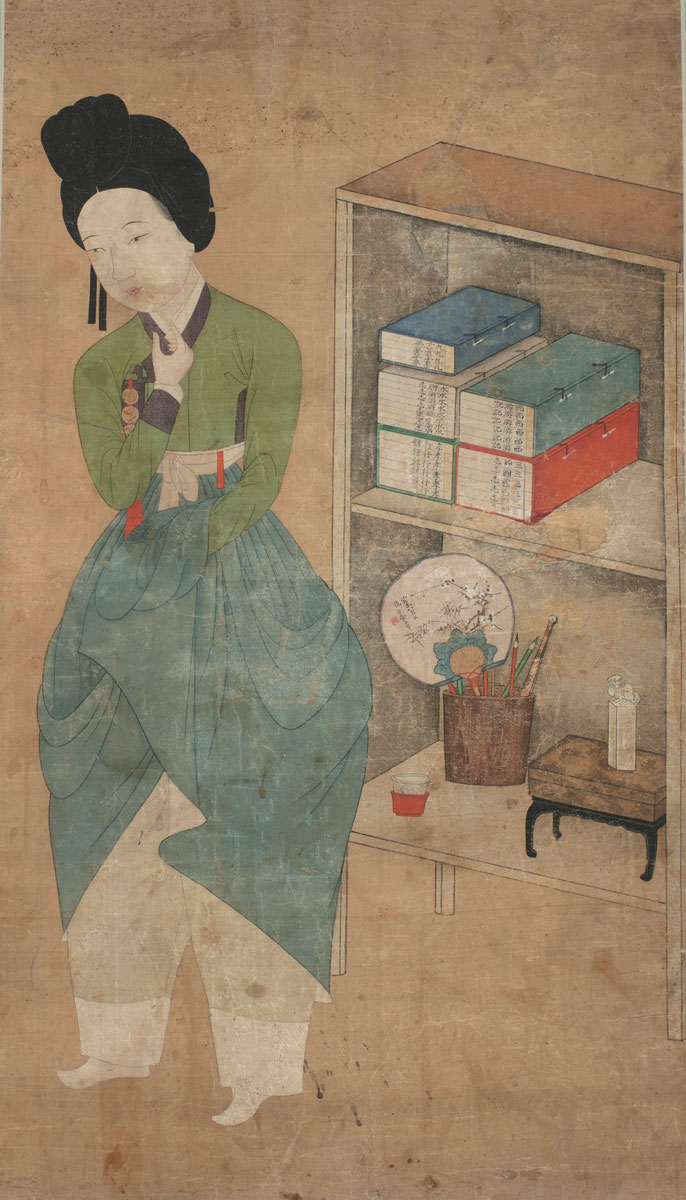
Jang Shiheung (1714‒after 1789), Young Woman by a Bookcase with Fan, Korea, Joseon Dynasty (1392−1897), hanging scroll: ink, color, and gold pigment on silk, 29⅞ x 17⅛ in. (76 x 43.5 cm); From a set of four paintings of virtuous women, signed: Bangho ja and dated 8/1763

Meritorious Men and Virtuous Women: Five Important Eighteenth-Century Korean Paintings
September 28 − October 9, 2026
17 East 76th Street, 3rd Floor

Special Exhibition Hours: Mon–Fri, 11am-5pm or by appointment (closed Oct 3-4)

Sebastian Izzard LLC Asian Art is pleased to present Meritorious Men and Virtuous Women: Five Important Eighteenth-Century Korean Paintings, featuring a small group of rare figure paintings from the late Joseon dynasty. A tradition of commemorative portraits of celebrated scholar-bureaucrats became a part of the court’s artistic production, where painters in the Joseon royal painting bureau were commissioned to paint portraits of elite men. Women were rarely the subject of figurative paintings and portraits, with a few select exceptions. For the most part, upper-class women are not depicted in Joseon dynasty paintings in accordance with period standards of propriety where the domestic lives of respectable women were kept private.

The coincidental acquisition of two fine works, a single portrait of a member of the scholarly elite, and a set of four paintings of virtuous women, have been brought together for the present exhibition. The Portrait of Yi Jeongbo at his 60th Birthday Party and the Four Paintings of Virtuous Women by Jang Shiheung together reflect the societal ideals of the Joseon dynasty. Mothers and wives, young and old, worked together to support the men of the family and raise sons to continue the patrilineal family line so that one day they could become accomplished men, such as Yi Jeongbo. The large scale of the paintings of women contrasts with the privacy of the domestic scenes that are usually shielded from public. However, the plentiful use of colorful pigment and accents of gold speak to the importance of these paintings, which captured the model behavior of upper-class women that served to support the public lives of upper-class men as scholar-officials and patriarchs and uphold Neo-Confucian patrilineal values.

The exhibition will be accompanied by a fully illustrated catalogue.

To learn more, click here.

• • •