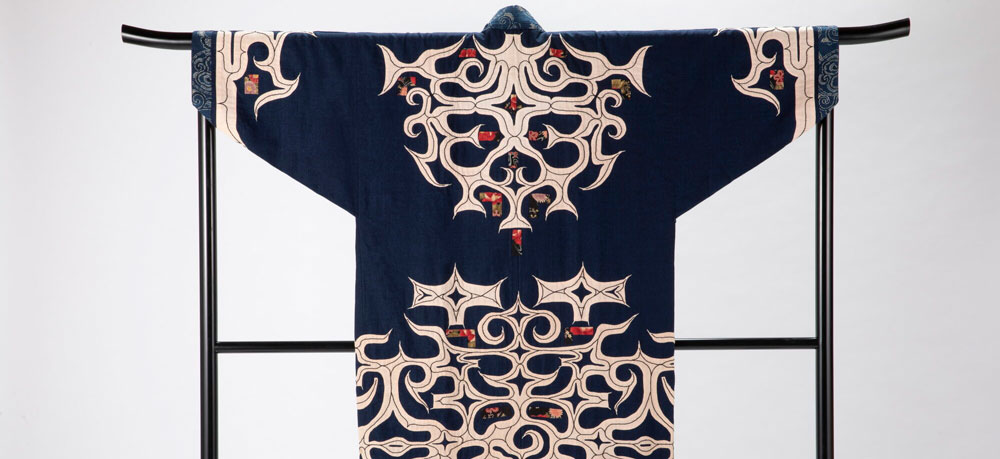

Nabeshima Plate, late 17th-early 18th century, Japan. Courtesy Zetterquist Galleries
An exceptional array of Asian art treasures awaits as Autumn Asia Week New York returns September 10–18, 2026. With more than a dozen gallery and online exhibitions across New York, alongside major fall auctions at Bonhams, Christie’s, Doyle, Freeman’s, Heritage Auctions, and Sotheby’s, this season promises an exciting week of discovery for collectors and art enthusiasts alike. Explore the extraordinary exhibitions and events below, and start planning your Autumn Asia Week New York!
Ancient and/or Contemporary Chinese Art
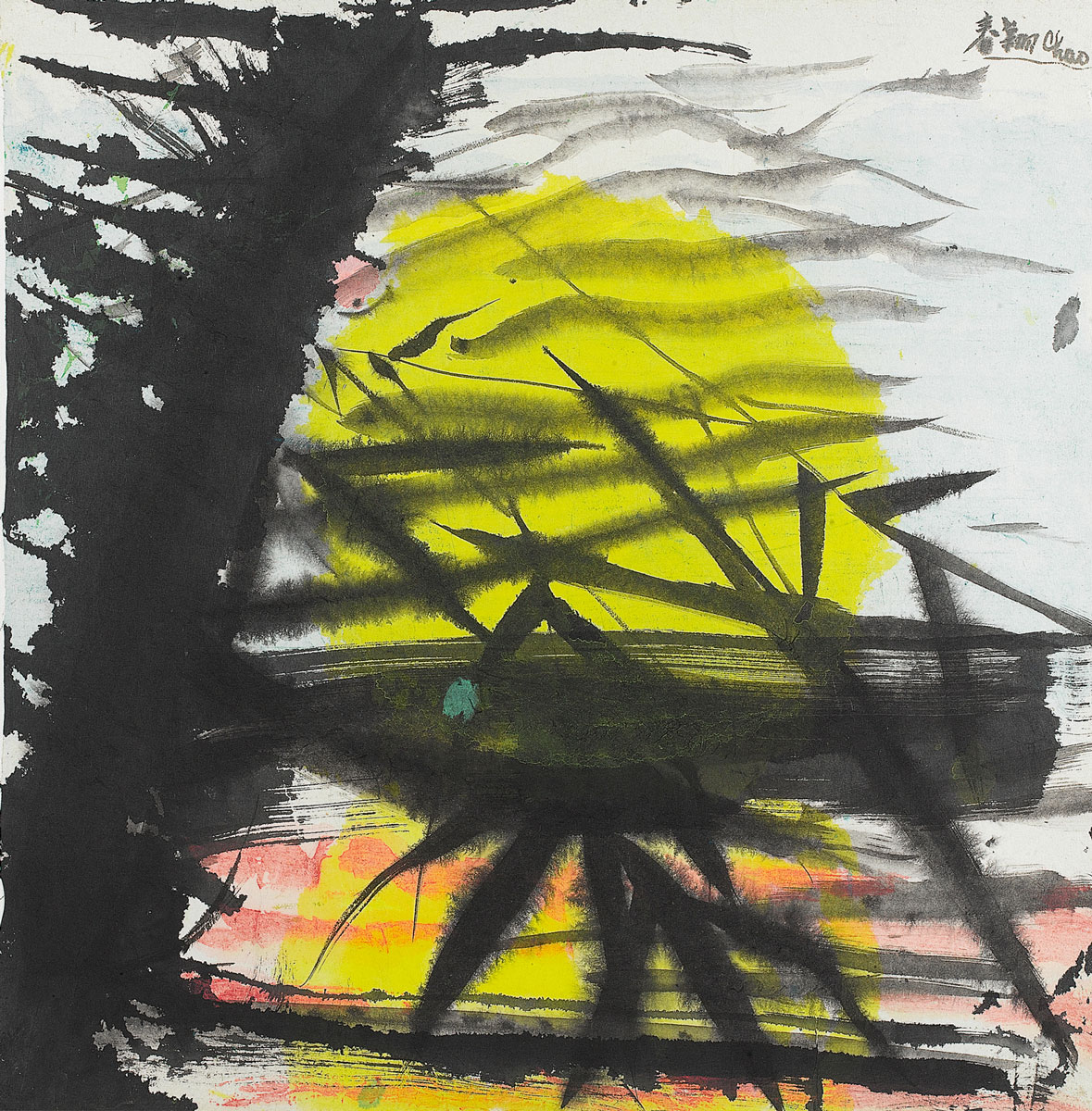
Chao Chung Hsiang (Born in 1918, Henan Province, China), Flowing Moon, undated, Chinese ink & acrylic on paper, 29 x 28 ½ in. (74 x 72 ½ cm); Courtesy Alisan Fine Arts
Alisan Fine Arts celebrates 45 years of championing contemporary Chinese art in 2026, and Chao Chung-hsiang has been a vital part of the gallery’s history since their early days. Chao studied under the renowned artist Lin Fengmian at the National College of Art in Hangzhou in 1939 before immigrating to Taiwan in 1948. His studies in Spain and experiences in Europe led him to New York in 1958, where he encountered the dynamic world of Abstract Expressionism and other post-war art movements. His works explore themes of nature, spirituality and abstraction, featuring flowers, fish, birds and cosmic imagery. This exhibition focuses on Chao’s black-and-white ink paintings alongside his renowned “hybrid paintings” of birds and fish executed in bright acrylics atop traditional ink washes. 120 East 65th Street
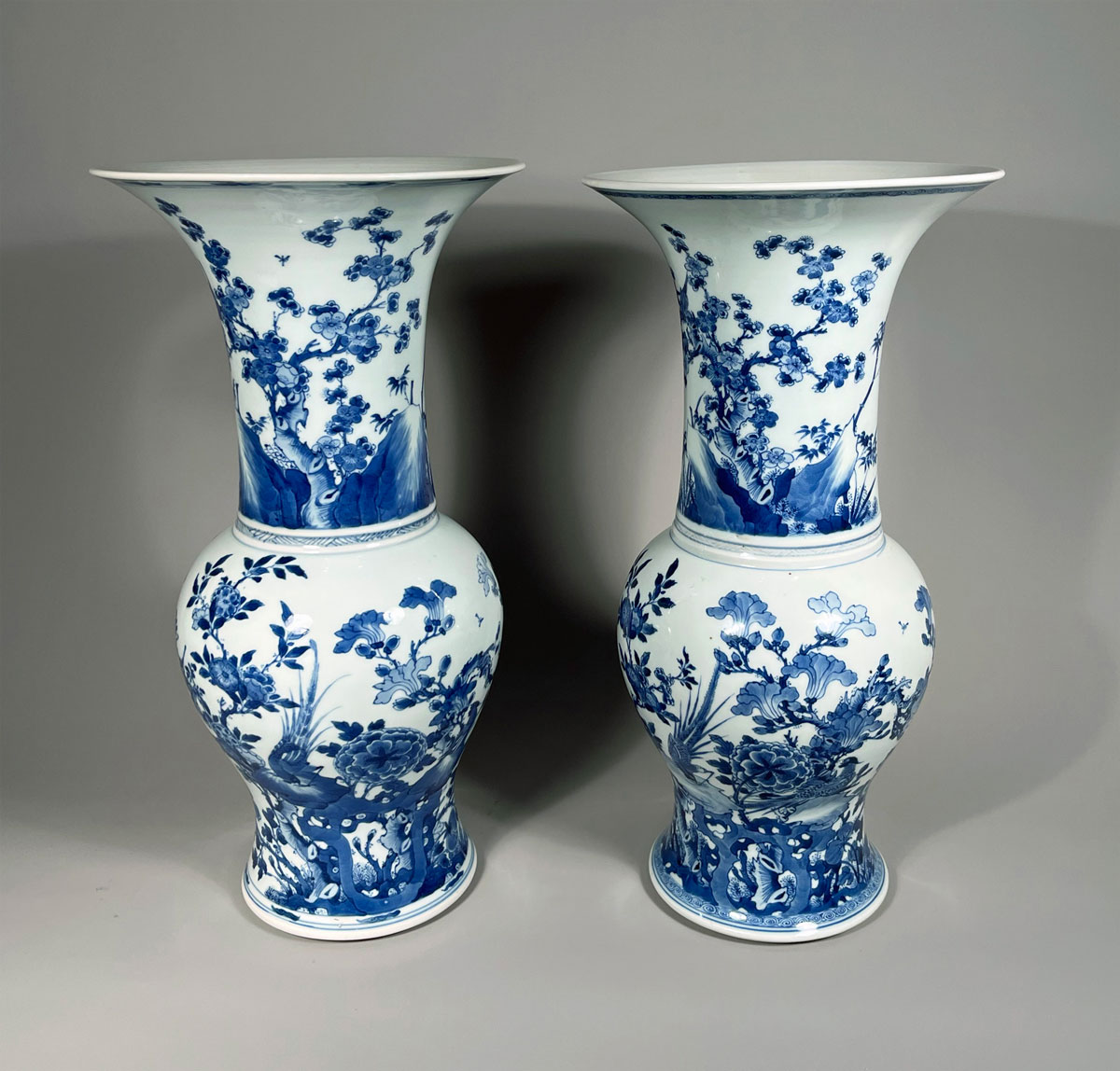
Pair of Chinese blue and white porcelain phoenix tail vases, Kangxi period, AD 1662-1722, height: 17 in. (43 cm); Courtesy Ralph M. Chait Galleries, Inc.
The Exhibition of Chinese Porcelains and Works of Art in both Chinese and Western Taste at Ralph M. Chait Galleries, Inc. has a wide purview but shines a spotlight on several masterpieces, primarily from private American collections. Among the highlights are a pair of Kangxi period,1662-1722, blue and white porcelain phoenix tail vases and a very rare pair of 18th century Chinese export porcelain figures of a gentleman and lady, beautifully decorated in famille rose enamels and clothed in designs indicative of their Chinese origin. 16 East 52nd Street, 10th floor
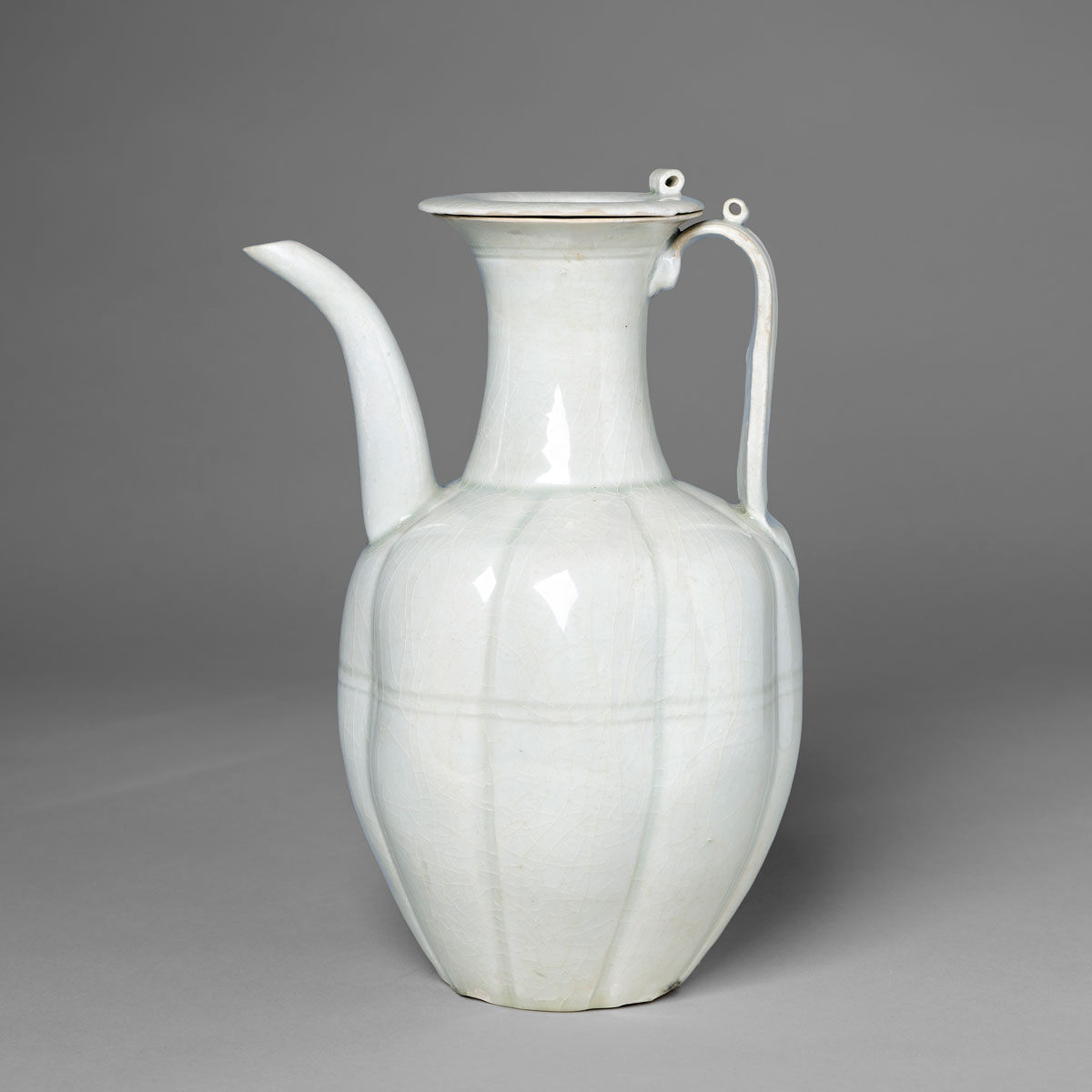
Large Qingbai Lobed Ewer and Cover, Song Dynasty 960-1279 AD, China, height: 24.2 cm; Courtesy Zetterquist Galleries
An impressive cross-section of Chinese and Japanese Ceramics is on view at Zetterquist Galleries. The Japanese pieces range in date from the Kofun to Edo periods to a group of 20th century modern Japanese pieces dating from 1930’s -1990’s. Modern masters Kawai Kanjiro, Shimaoka Tatsuzo, Yagi Akira and Takiguchi Kazuo form the latter group. Among the ceramics represented are a Haniwa head of a warrior figure, Sueki wares from the 6th century, an Oribe Kutsu-gata shaped tea bowl from the late 16th-early 17th century, a fine example of a late 17th century Nabeshima polychrome plate and other Edo Period pieces. The highlight among the Tang and Song Dynasty ceramics from Ding, Yaozhou and Yue kilns from the North and Qingbai wares from southern kilns, is a large Song Dynasty Qingbai lobed ewer and cover, formerly in a private Japanese collection. 3 East 66th Street, 2nd floor, by appointment
Ancient and/or Contemporary Japanese Art

Kiyomizu Rokubei VIII, Sculpture “Kiseki” 1230-C (Sculpture), stoneware, 5 7/8 × 14 3/8 × 14 in. (15 × 36.5 × 35.5 cm); Courtesy Dai Ichi Arts, Ltd.
Kiyomizu Rokubei: 250 years of Ceramic Expression from Kyoto at Dai Ichi Arts, Ltd. features an alluring selection of works by the fifth through eighth generations of one of Japan’s most distinguished ceramic dynasties. Based in Kyoto since the mid-Edo period, the Rokubei lineage has endured through continual reinvention, with each generation responding to the artistic and technological developments of its time. The exhibition traces this evolution from the fifth and sixth generations’ experiments with glaze, painted decoration, and classical references to the sculptural, architecturally informed slab-built forms of the seventh and eighth generations. The current head of the family, Kiyomizu Rokubei VIII, Masahiro, will travel from Kyoto to attend the opening reception at Dai Ichi Arts on September 10. 18 East 64th Street, Suite 1F, by appointment
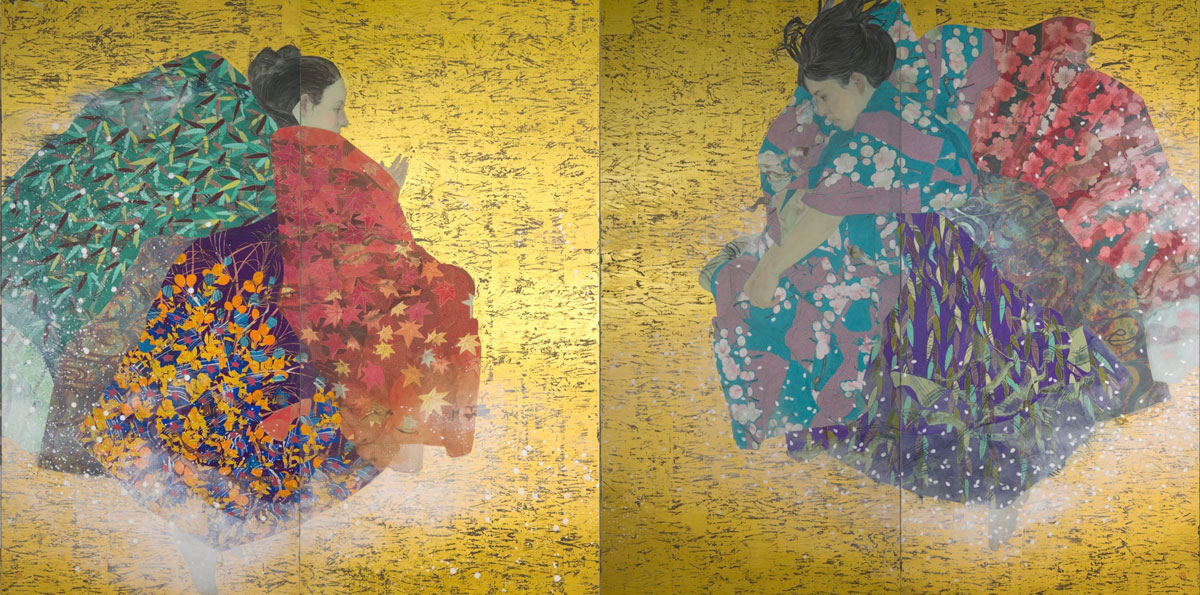
Kaori Someya, Pictures of Seasonal Changes in Dress, 2026, pair of two-panel folding screens: gold leaf, silver leaf, mineral pigments, dye, washi paper, and animal glue, H70 7/8 x W141 3/4 x D3/4 in. overall (H180 x W360 x D2 cm overall); Photo: copyright the artist; Courtesy Ippodo Gallery
Ippodo Gallery will debut Kaori Someya’s solo exhibition, Kaori Someya: The Light Within. Someya, a Nihonga painter based in Tokyo, works in the thousand-year-old technique of urahaku–backing translucent washi paper with gold and platinum leaf so her paintings glow with an inner light. Her portraits of women in richly patterned kimono explore the tension between societal expectation and the quiet persistence of personal identity. More than a dozen new works will be shown, including the exhibition’s centerpiece, Pictures of Seasonal Changes in Dress, a Nihonga folding screen depicting two women in quiet contemplation. Rendered in mineral pigments, washi, ink, and metal leaf, it balances stillness against the energy of gold urahaku backing and vibrant color. 35 North Moore Street, Ground floor

Iguchi Daisuke (b. 1975), Ash-coated vessel with silver slip, 2026, glazed stoneware, 11 x 16 1/4 x 13 in.; Photography by Yano Tsutsumi; Courtesy Joan B Mirviss LTD
Joan B. Mirviss LTD is delighted to present Patina of Time, their long-anticipated solo exhibition of new works by Iguchi Daisuke created specifically for this show, a decade after his highly successful international debut at their gallery. A native of northeastern Japan, Iguchi creates sculptural vessels in the tradition of the region’s most renowned ceramic masters, Kamoda Shōji and Wada Morihiro. With linear patterns that undulate in perfect harmony with the gently curving and occasionally lobed vessel forms they adorn, Iguchi’s work carries on the legacy of ceramics that unify surface and form. He has developed a unique process to create weathered and eroded textures on his vessel forms, and he juxtaposes this with metallic surface patterns characterized by mathematical precision. 39 East 78th Street, 4th floor

Onihira Keiji, Makie Box, Ōmurasaki between Sun and Shade, 2025, dry lacquer with white mother-of-pearl, jewel beetle wings, eggshell, gold, silver, platinum, pigments, 6 ¾ × 11 × 5 ⅞ in. (17.1 × 28.2 × 14.8 cm); Courtesy Onishi Gallery
Onishi Gallery celebrates its milestone twentieth anniversary with Homo Faber–Man the Maker, an exhibition that brings together ten contemporary artists. Among them are Kaneshige Kosuke, Rusu Aki, Konno Tomoko, Onihira Keiji, and Noguchi Ken, who employ materials ranging from gold and silver to eggshell and seashells, reimagining Japanese traditions through fresh, contemporary perspectives. Collectively, their work reflects the transformative nature of art and the dialogue between the makers. 16 East 79th Street

Kawase Hasui (1883-1957), Twenty Views of Tokyo: Shiba Zojo Temple, 1925, woodblock print, 15 1/4 x 10 3/8 in. (38.6 x 26.5 cm); Courtesy Scholten Japanese Art
Scholten Japanese Art will show The León Chattah Collection of Modern Japanese Prints, a group of approximately sixty works by 20th century shin hanga masters from the ‘hidden’ collection of León Chattah (1934-2025). Recently rediscovered by his family, this remarkable ‘capsule collection’ had been tucked away in the back of a closet in a New York City apartment since the early 1980s. A standout print in the Chattah collection is Twenty Views of Tokyo: Shiba Zojo Temple (popularly known as Snow at Zojoji Temple) by Kawase Hasui, a winter scene where he captures the serene quiet of snowfall on the grounds of a historic Buddhist temple. In recent years, this print has vaulted to being the most famous shin-hanga landscape, and most recently, possibly one of the most recognizable Japanese woodblock prints of all. 145 West 58th Street, Suite 6D, appointment appreciated

Kiyoshi Hamada, DRAWING (2), 1985, paper, pencil, 102.4 x 44.5 in. (260 x 113 cm); Courtesy SEIZAN Gallery New York
The solo exhibition, Kiyoshi Hamada: Gazing Into Stillness—Works 1975–2026 at SEIZAN Gallery surveys five decades of work from 1975 to the present. All the phases of Hamada’s work are included, starting with the red-line plywood paintings of the mid-1970s, followed by the DRAWING series, started in the 1980s which Hamada turned the elemental, labor-intensive act of drawing graphite on paper into a meditation on accumulated time. In the 2000s, Hamada began another body of work of layering, scratching, and carving paint to unearth buried strata of color. His latest works of ink on paper are also featured. 525 West 26th Street, Ground floor

Kobayashi Minminsai I, Ohanaike (Flower Vessel), 1770-1779, madake bamboo, rattan, 14.75 x 8.75 x 7.5 in.; Image credit: Mankus Photography; Courtesy TAI Modern
At its Santa-Fe based gallery, TAI Modern’s exhibition, Sencha to Sculpture: The Evolution of Japanese Bamboo Art to the 1960’s, follows the transformation of Japanese bamboo art from tea ceremony utensils to sculptural form. This first installment of a planned three-part series brings together nearly 50 bamboo works and introduces pieces from the Minminsai lineage, including a signed basket by Kobayashi Minminsai I (d. 1791). This basket is particularly notable as it predates the work of Hayakawa Shokosai I (1815-1897), who has long been credited as the first Japanese bamboo artist to sign his work, identifying Minminsai I, rather than Hayakawa, as the earliest confirmed signer in the history of the medium. 1601 Paseo de Peralta in Santa Fe, NM

Places Along the Tokaido, early Edo period, ca 1620, Japan, pair of six-panel folding screens, ink, mineral colors, shell powder, and gold on paper with gold leaf, size each screen: 47 x 110½ in. (119.5 x 280.5 cm); Courtesy Thomsen Gallery
Japanese Masterpieces 17th–21st Centuries at Thomsen Gallery will feature an early 17th-century six-panel screen depicting scenes from life at the Chinese imperial court and a pair of screens, depicting places along the Tokaido road. Later screens include a composition on gold-leaf of blooming cherry and maple from the early 1800s and a screen by Fudo Ritsuzan from the 1930s. A group of hanging scrolls by leading painters of the Taisho and early Showa eras including Yamamoto Shunkyo, Kikuchi Keigetsu, Ikeda Yoson, and Konoshima Ōkoku is at the heart of the show. This was a period in which artists working for the domestic market brought new naturalism and Western experimentation to traditional formats. The exhibition also includes ikebana bamboo baskets by masters including Tanabe Chikuunsai II and Hayakawa Shōkosai V, who was a Living National Treasure, as well as modern and contemporary bronzes. 8 East 67th Street
Ancient and/or Contemporary Korean Art

Sang-lan Kim, “Genesis 7-26,” 2026, jumtchi, mulberry paper, 23 3/4 x 15 3/4 in. (60.5 x 40 cm.); Courtesy HK Art and Antiques, LLC
At HK Art and Antiques LLC Painters and Their Portraits: Four Women Artists from Korea, Europe and the United States is a group exhibition of four exceptional women artists whose practices span Korea, Germany, France, and the United States: Ouhi Cha (b. 1945), Myong Hi Kim (b. 1949), Kim Sanglan (b. 1952), and Cornelia Thomsen (b. 1970). Though rooted in distinct cultures and working across painting, sculpture, installation, and drawing, these four artists share a fundamental orientation: each has built her practice across borders, negotiating between East and West, past and present, the deeply personal and the broadly historical. The exhibition takes as its premise the condition of living and working between worlds — not as rupture or exile, but as a generative, sustaining force. 8 East 67th Street, Ground floor
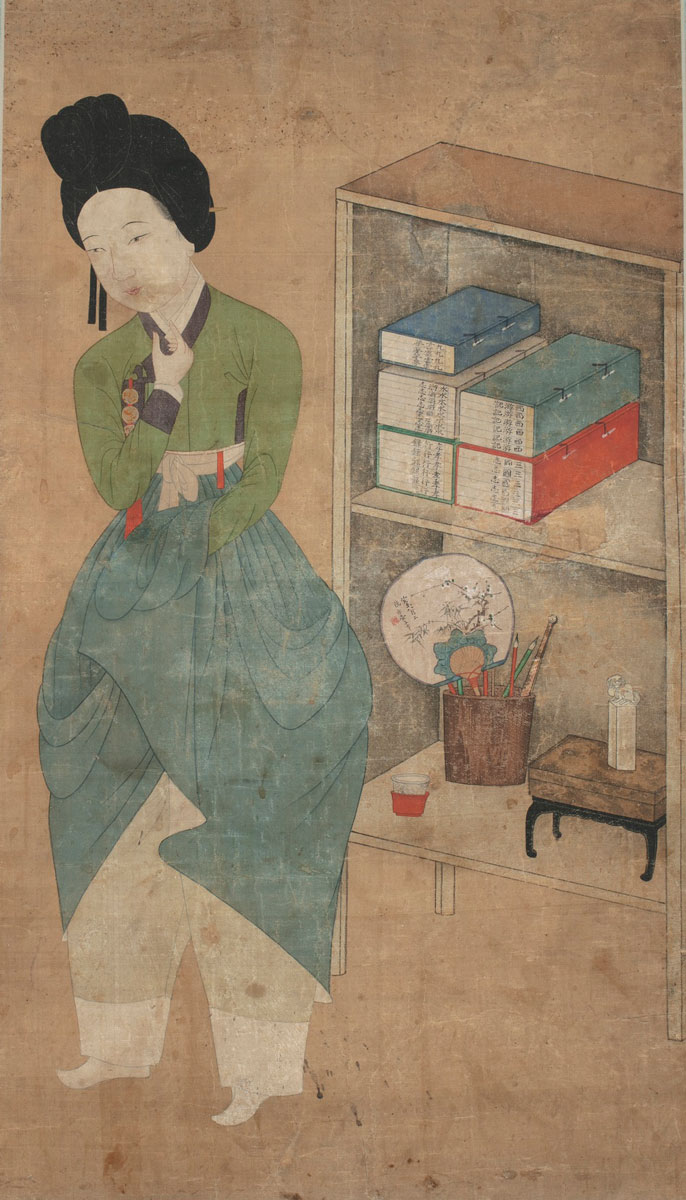
Jang Shiheung (1714‒after 1789), Young Woman by a Bookcase with Fan, Korea, Joseon Dynasty (1392−1897), hanging scroll: ink, color, and gold pigment on silk, 29⅞ x 17⅛ in. (76 x 43.5 cm), from a set of four paintings of virtuous women, signed: Bangho ja and dated 8/1763; Courtesy Sebastian Izzard LLC Asian Art
Pivoting from Japanese to Korean art for his fall exhibition, Sebastian Izzard LLC Asian Art will present Meritorious Men and Virtuous Women: Five Important Eighteenth Century Korean Paintings, a small but fascinating group of rare figure paintings from the late Joseon Dynasty. They were part of a tradition of commemorative paintings by Joseon court painters of celebrated scholar-officials, almost always depicting men. Prevailing standards of propriety preferred that the domestic lives of upper-class women remain private. The group of four paintings of virtuous women by Jang Shiheung are therefore remarkable. The large stature of the figures relative to the domestic elements depicted and the lavish use of colorful pigment with accents of gold further reflect the importance of these works. 17 East 76th Street, 3rd floor

Maia Ruth Lee, B.B.Scale 1–2, 2026, acrylic on canvas, 25 1/4 x 98 in. (64.1 x 248.9 cm); Photo: Hyunjung Rhee; Courtesy the artist and Tina Kim Gallery
Tina Kim Gallery is presenting Maia Ruth Lee: Double Vision, her second solo exhibition with the gallery. Bringing together a new body of paintings from the artist’s ongoing Bondage Baggage series, as well as expansive sculptural works, video, and installation, the show examines migration as a condition of simultaneous perception, where multiple histories, temporalities, and systems of knowledge coexist. The title is taken from the writings of Homi Bhabha and Salman Rushdie, in which the migrant’s “double vision” is described as an experience of seeing both the place left behind and the place one now inhabits, understanding that neither view is complete on its own. For Lee, this idea becomes less a metaphor than a way of working. Across painting, sculpture, film, and installation, she considers how memory, language, and material experience accumulate through movement, producing forms that hold contradiction, comparison, and overlap simultaneously. 525 West 21st Street
These two galleries outside New York are presenting exhibitions of their works on their respective websites:

Kawase Hasui (1883-1957), Morning in Beppu, 1922; Courtesy Egenolf Gallery Japanese Prints
The exhibition at Egenolf Gallery Japanese Prints, New and Creative: Japanese Prints from the 20th Century, features work by the shin-hanga “new prints” giants Kawase Hasui and Ohara Koson as well as a selection of works from the “creative prints” (sosaku hanga) movement. One of the highlights is an unusually scarce, pre-earthquake design from the series “Selection of Scenes of Japan.” This is the first work by Hasui that deals with a group of people, whose small forms in this composition are beautifully portrayed. A few fishing boats compose the middle ground, the spa town of Beppu and the faraway mountains are silhouetted in a purplish blue. From a limited edition, verso, numbered “nine” from an edition of 300 prints. www.egenolfgallery.com

Maharaja Raj Singh and His Grandson Bhavani Singh in Procession, Madhya Pradesh, Sitamau, signed by Pyar Chand of Mandsaor, October 1847, opaque pigments and gold on paper, 35 x 47 cm (including border); Courtesy Francesca Galloway
Francesca Galloway will present Observed & Imagined Indian Painting 17th – 19th Century, a selection of important Indian paintings in a printed publication. The works on paper, a small group of which come from a private English collection, have been researched and written about by John Seyller and other scholars. The publication explores themes such as devotion, kingship and narration through the various works. Maharaja Raj Singh and His Grandson Bhavani Singh in Procession, one of two paintings depicting the extravagant trappings of Indian royalty is from Sitamau, a fascinating but little-known center of Indian painting in a tiny state in the Mandsaur District in Madhya Pradesh. The names of only three Sitamau artists have been preserved. This painting, dated 1847, is signed by Pyar Chand, the most extraordinary of these three artists. He produced singular paintings that embodied the brilliant colors and abstract compositions that are associated with the best of Rajput painting. www.francescagalloway.com