Discover Dynamic Exhibitions at Alisan Fine Arts

Alisan_FongChungRay

Fong Chung-Ray, 2014-16 (detail), 2014, mixed media on canvas, 53 ¾ x 35 ½ in.

Alisan Fine Arts is honored to announce its exclusive representation of Fong Chung-Ray (b. 1934), a seminal figure in Chinese abstraction and a founding member of the Fifth Moon Group. This milestone marks a new chapter in the gallery’s long-standing commitment to advancing cross-cultural dialogues in modern and contemporary art. Opening October 29, Fong Chung-Ray: Meditations in Abstraction will be the artist’s first New York exhibition, a six-decade survey celebrating his distinctive synthesis of Western modernism and Asian aesthetics. Join them for the opening reception on October 29, and be sure to catch the final days of Ming Fay: Botanical Curiosities and Pixy Liao and Ren Light Pan: Portraits, closing Saturday, October 25, two remarkable exhibitions not to be missed!

Fong Chung-Ray: Meditations in Abstraction
October 29 – December 20, 2025
Opening Reception: Wednesday, October 29, 6-8pm
120 East 65th Street, NYC

On October 29th, Fong Chung-Ray 馮鍾睿 (b. 1934), the eminent Chinese American artist who immigrated to Taiwan as a teenager and has been based in San Francisco since 1975, will make his New York debut. Fong’s practice bridges Eastern philosophy and Western modernism. Trained in Taiwan and later influenced by Abstract Expressionism during his Rockefeller Foundation fellowship, he developed an experimental approach that merges the gestural energy of American painting with the contemplative sensibility of Chinese calligraphy. His innovations—including the fabrication of a coarse palm-fiber brush in the 1960s, the use of acrylic to emulate ink, and the development of a unique “reverse rubbing” transfer technique produced richly textured, time-worn surfaces reminiscent of weathered walls and ancient manuscripts. Since the 1980s, Fong has incorporated Buddhist sutras into his compositions, transforming sacred text into meditations on form, formlessness, and impermanence.

Born in Henan, China, and based in San Francisco since 1975, Fong has lived through cultural shifts that profoundly shaped his artistic identity. As a member of the influential Fifth Moon Group, a Rockefeller Foundation fellow, and a lifelong Buddhist practitioner, he has continually expanded the language of abstraction while remaining rooted in Eastern heritage.

They look forward to welcoming you soon!

To learn more, click here.

AlisanMayInstall

Installation view, Ming Fay: Botanical Curiosities

Ming Fay: Botanical Curiosities
and
Pixy Liao and Ren Light Pan: Portraits
Closing Saturday, October 25, 2025

Don’t miss the final days to see Ming Fay: Botanical Curiosities and Pixy Liao and Ren Light Pan: Portraits—two remarkable shows closing October 25! Experience Ming Fay’s poetic exploration of nature and mythology, and discover how Liao and Pan turn self-portraiture into a meditation on identity and storytelling.

To learn more, click here.

• • •

Illuminating China’s Contributions to Newport

Newport_Lanterns

Installation view of Yu-Wen Wu’s Lanterns

These contemporary lanterns, created by artist Yu-Wen Wu for The Celestial City: Newport and China exhibition at Rosecliff (2023-24), have found an appropriate new home in the Chinese Tea House at Marble House.

Each lantern has a theme – Entrepreneurship, the Exclusion Act, Arrivals, Trade and Women’s Suffrage – illuminating the contributions of Chinese and Chinese American individuals to Newport and the U.S. more broadly. During the Gilded Age, more than 60 Chinese businesses operated in Newport, while Chinese immigration was banned by federal law in 1882, with race- and nationality-based quotas not eliminated until 1965. Chinese workers made significant contributions to the nation’s prosperity in the 19th century, particularly in the construction of the Transcontinental Railroad. Newport merchants—including the Wetmores of Chateau-sur-Mer and the Kings of Kingscote—profited from trade with China in commodities such as tea, silk, and opium. Chinese American women, such as Mabel Ping-Hua Lee and Grace Yip Typond, played vital roles in the women’s suffrage movement and may have inspired Alva Belmont to build the Tea House, which she opened for a major suffrage conference in 1914.

To learn more about this fascinating exhibition, click here.

• • •

Last Week of Shufa Essentials at Fu Qiumeng Fine Art

FQM_ShufaInstall

Installation view, Shufa Essentials 書之有法

Shufa Essentials 書之有法
Closing Saturday, October 25, 2025
65 East 80th Street, NYC

Don’t miss the final days of Shufa Essentials 書之有法, an exhibition dedicated to the art of Shufa—commonly translated as “Chinese calligraphy” at Fu Qiumeng Fine Art!

Shufa is rooted in a different framework that is shaped by the unique nature of Chinese characters—logographs that are at once visual, phonetic, and ideographic. This foundation allows Shufa to unite language, philosophy, and artistic expression into a single art form. Perhaps the best translation is to embrace Shufa as its own term. In the hands of the artist, characters unfold not only as words but also as pure form, alive with cadence, rhythm, and energy.

For more than two thousand years, artists have used brush, ink, and paper not only as tools of writing but as instruments of expression. Every stroke is a trace of the artist’s presence—a line shaped by rhythm, vitality, and state of mind. With no erasures and no second chances, each mark preserves the immediacy of its making, a visible record of body and spirit joined in a single moment.

This exhibition highlights three principles at the heart of the tradition. The centered use of the brush channels balance and strength into every stroke. Handmade paper, unyielding yet responsive, registers each decision without disguise. And Qi—often described as breath or vital energy—animates the work, infusing it with rhythm, mood, and life.

Through selected works and interpretive guides, Shufa Essentials 書之有法 invites visitors to follow the artist’s hand, sense the flow of ink on paper, and encounter Shufa as one of China’s most profound and enduring artistic traditions—an art that is at once writing and image, continuity and expression, discipline and spirit.

To learn more, click here.

• • •

Onishi Gallery and Thomsen Gallery Participate in Madison Avenue Fall Gallery Walk 2025

MadisonAve2025

(Left): Kondō Masahiko (b. 1971), Bizen Large Flower Vase, 2023, ceramic, 14 ¾ × 14 ⅞ × 10 ⅝ in (37.5 × 38 × 27 cm), courtesy Onishi Gallery; (Right): Fukami Sueharu, Ki no toki (Resolute Spirit), 2002, porcelain with seihakuji glaze, on a walnut base, height including base 68 in (173 cm), courtesy Thomsen Gallery

Madison Avenue Fall Gallery Walk
Saturday, October 25, 2025

Join Onishi Gallery and Thomsen Gallery for the Madison Avenue Fall Gallery Walk on Saturday, October 25! This free, all-day event invites art lovers to explore a vibrant lineup of exhibitions and expert talks along Madison Avenue and its side streets, spanning East 57th to East 86th Streets. Discover all the exceptional artwork on display and register for their talks today!

Explore the exhibitions and special talks hosted by Onishi and Thomsen Galleries below:

Onishi Gallery
Artist Talk & Reception with an Interior Designer: 3pm 
16 East 79th Street (Madison-Fifth), 10am-6pm

Onishi Gallery invites you to a sneak preview of their upcoming special exhibition Clay, Iron, and Fire: The Bizen and Setouchi Heritage, celebrating the enduring artistry of ceramics from two culturally rich cities in Okayama Prefecture.

Thomsen Gallery
Gallery Talk: 12pm, 2pm and 4pm
8 East 67th Street (Madison-Fifth), 11am-5pm

Thomsen Gallery is delighted to welcome you to their current exhibition Porcelain Sculptures by Fukami Sueharu, featuring 20 works from the 1970s to today, including his signature large vertical and horizontal sculptures. To deepen your experience, join one of the gallery’s talks at 12pm, 2pm, or 4pm where Erik Thomsen will discuss techniques used and developments in Fukami Sueharu’s artwork on the basis of the works on display.

Onishi Gallery and Thomsen Gallery look forward to welcoming you for a vibrant day of art, culture, and inspiration! To register for their talks, click here. To view the Madison Avenue Fall Gallery Walk map, click here.

• • •

Cincinnati Art Museum Joins Asia Week New York

CAM_ZhangJin_2011.70_01

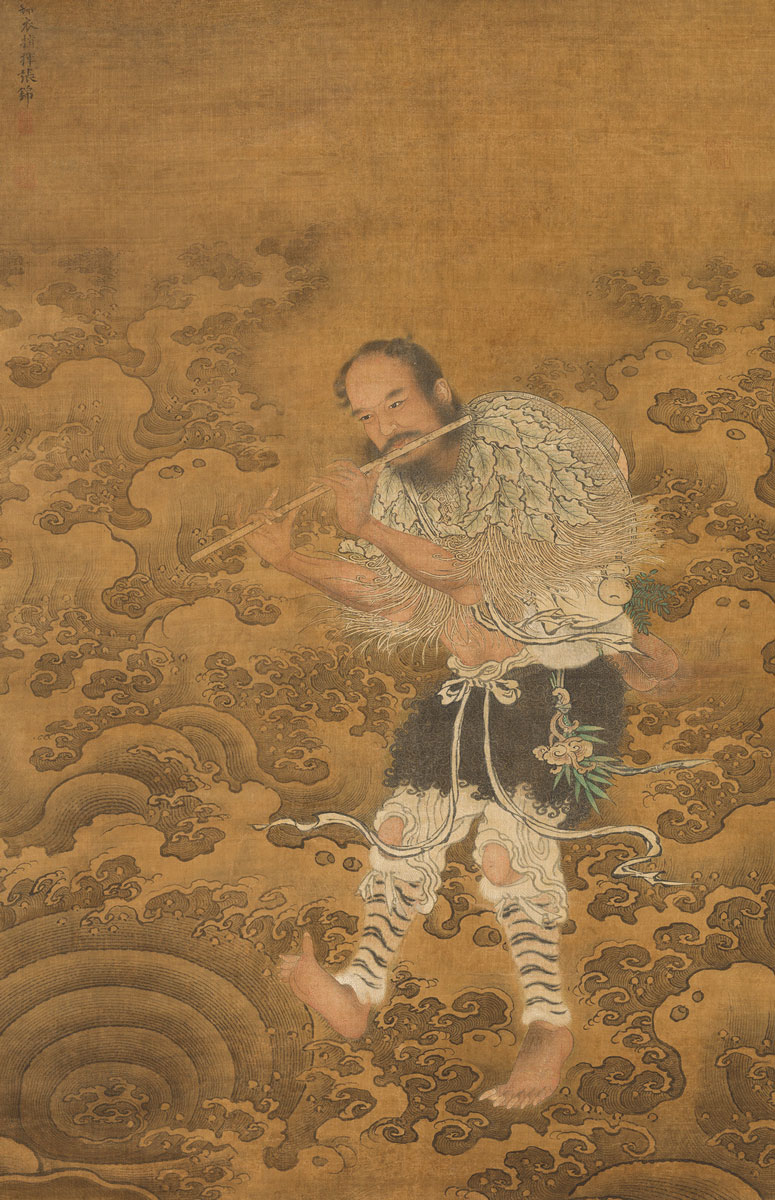
Zhang Jin 張錦 (Chinese, ca. 1450s–1520s), Daoist Immortal Han Xiangzi, late 15th century, hanging scroll, ink and color on silk, Museum Purchase: Gift of the Duke and Duchess of Talleyrand-Perigord, by exchange, 2011.70

Asia Week New York is thrilled to welcome the Cincinnati Art Museum as its newest cultural institution member! Located in scenic Eden Park, the Cincinnati Art Museum features a diverse, encyclopedic art collection of more than 73,000 works spanning 6,000 years. In addition to displaying its own broad collection, the museum presents several national and international traveling exhibitions each year, along with a vibrant array of art programs, activities, and special events. General admission is always free, thanks to the Rosenthal Family Foundation, with additional benefits available to museum members.

Don’t miss Rediscovered Treasures, a captivating new exhibition highlighting artworks from the museum’s renowned East Asian Art collection—many newly identified through recent research that reveals their hidden histories. Visitors can also explore the museum’s extensive collections of South Asian Art, Islamic Art, and Antiquities, each offering a rich glimpse into the artistic traditions and histories of diverse cultures. Free exhibition tours are available every Thursday evening!

Rediscovered Treasures
September 19, 2025 – January 18, 2026
Free Exhibition Tours Every Thursdays, 6:30–7:30pm
Evenings for Educators: Rediscovered Treasures, Thursday, January 15, 2026, 4-7pm
The Thomas R. Schiff Gallery (Gallery 234 & 235)

Rediscovered Treasures features nearly 60 artworks selected from the Cincinnati Art Museum’s East Asian Art collection. Each tells a fascinating story of its rediscovery through scholarship or conservation, fulfilling two key goals of the museum’s mission: interpreting and preserving the cultural objects in our care.

The museum acquired the core of its East Asian collection in the late nineteenth century when Cincinnati became a flourishing cultural center in the Midwest. These early acquisitions were often left unidentified, misidentified, or sometimes not accessioned at all due to a lack of information at the time. However, over the past two decades, new research on these works and others in the East Asian collection has led to many exciting discoveries, providing not only new information about the objects themselves, but also their histories and provenances.

Be sure to join all the related programs!

To learn more, click here.


CAM_Celestial_2001.59
Celestial Maiden Attended by an Ascetic and a Gana. Rajasthan, India, c. 1000–1099. Stone, 23 1/4 × 13 3/4 × 6 1/2 in. (59.1 × 34.9 × 16.5 cm). Cincinnati Art Museum, Museum Purchase with funds provided by Carl and Alice Bimel, 2001.59

South Asian Art, Islamic Art and Antiquities Collections

The Cincinnati Art Museum’s department of South Asian Art, Islamic Art, and Antiquities is honored to steward distinguished collections that include over five thousand works of art. Tracing a trajectory that begins with neolithic period objects from the ancient Middle East, the collection promotes the arts and cultures of a vast geographic region over centuries. Recently, the collection has expanded to include contemporary works from artists based in greater South Asia and the Middle East, as well as diasporic artists in the US and Europe.

The arts of historic South Asia (often defined as modern India, Pakistan, Bangladesh, and Sri Lanka) are represented through architectural fragments, decorative arts, and paintings. The arts of the Islamic World (defined as countries where Islam was/is widespread, and here concentrates on the Middle East and Central Asia) includes strengths in ceramics, metalwork, and the calligraphic arts.

At the center of the ancient collections are the architectural fragments from Khirbet et-Tannur. As the most significant collection of Nabataean material outside of Jordan, CAM is committed to the research, conservation, and display of these works for visitors and scholars alike. The ancient Mediterranean collection features notable examples of sculpture and ceramic vessels from ancient Egypt, Greece and Rome.

The department generates new scholarship through collection-based research, presented to our audiences through exhibitions, publications, and digital projects.

To learn more, click here.


East Asian Art Collection

The East Asian Department of Cincinnati Art Museum covers the arts of China, Japan, and Korea. The Museum acquired its first East Asian art works in 1881, making it one of the oldest museum collections of East Asian art in the United States.

The Chinese art collection spans nearly five thousand years, from the Neolithic to the present. Major strengths of the current holdings are ancient ritual bronzes of the Shang and Zhou dynasties, Buddhist sculptures from the sixth to the nineteenth centuries, ceramics from the Neolithic period to the Qing dynasties, and paintings from the thirteenth to the twentieth century.

The Japanese art collection of nearly 5,000 works is the largest of the East Asian collection, which includes: ceramics, paintings, prints, metalwork, sculptures, objects in lacquer and ivory, and other forms. The collection is especially rich in the arts of the Edo period. The Korean art collection includes ceramics, metal and lacquer works, paintings, prints, and textiles.

To learn more, click here.

• • •

Dai Ichi Arts, Ltd. Presents SILENT EARTH: Contemporary Ceramics by Kato Mami

DaiIchi_KatoKishibe

Kato Mami, Kishibe, 2025, Seto porcelain, h:32 x w:34 x d:32.5 cm, with signed wood plate

SILENT EARTH
Contemporary Ceramics by Kato Mami
October 23 – November 6, 2025
Opening Reception with Artist: Thursday, October 23, 4-7pm (RSVP required)
Special Weekend Hours: Sunday, October 26, 1-5pm
18 East 64th St, Ste 1F, NYC

Dai Ichi Arts, Ltd. is honored to present the first New York solo exhibition of Tokoname-based ceramic artist Kato Mami (b. 1963). Renowned for her innovative glazes, titled “Frost Glaze,” over porcelain vessel forms, Kato’s work invites audiences to contemplate the inner life of vessels, where interior and exterior converge as sites of presence, imagination, and human connection.

Working primarily with porcelain slabs, Kato constructs sculptural vessels that recall glacial terrains, oceanic tides, and distant celestial landscapes. Her meticulous hand-building process—layering, folding, and draping porcelain clay—imbues each work with a delicate balance between fragility and strength.

The exhibition includes a selection of Kato’s celebrated chawan (tea bowls), the forms for which she became the first woman in history to win the Shoroku Chawan Competition in 2015, and the Koie Ryoji prize in the Chouzou Tougei Exhibition, These intimate works translate vast imagined landscapes into vessels that rest in the palm of the hand, their interiors embodying what Kato describes as a “soul-like presence.”

Kato’s achievements have been recognized across Japan, with the Grand Prize at the Mino Ceramics Exhibition (2019) and the Japan Ceramic Art Exhibition (2021) among her honors. Beyond accolades, her practice is deeply rooted in an exploration of time, memory, and universality. “I seek forms that transcend time,” she reflects, “silent presences that radiate a sense of universal beauty.”

This milestone exhibition for the artist offers New York audiences the rare opportunity to meet the artist and experience the depth of Kato’s vision through a curated collection of her latest work: vessels as sanctuaries of acceptance, imagination, and connection.

The artist will be in the gallery to meet guests, collectors, and fans of her work on the following days:

  • Thursday, October 23, 2025 | 4-7pm
  • Sunday, October 26, 2025 | 1-4pm
  • Tuesday, October 28, 2025 | 2-4pm
  • Wednesday, October 29, 2025 | 2-4pm

There is no need to make an appointment to visit us on these dates: simply drop in and say hello!

Kato Mami is also teaching a Slab Building Workshop at Peters Valley School of Craft in New Jersey from October 31–November 2, 2025. There are a very limited number spots remaining! This is a rare opportunity to learn from a highly skilled artist from Japan. Visit Peters Valley School of Craft’s website here for full details and registration.

To learn more and view the online catalog, click here.

• • •

Welcoming the Portland Art Museum

Portland_Chizuko_Jama-Masjid

Yoshida Chizuko (Japanese, 1924–2017), Jama Masjid, 1960, color woodblock print on paper, The Vivian and Gordon Gilkey Graphic Arts Collection. Portland Art Museum, Portland, Oregon, 83.57.222. © Yoshida Chizuko

Asia Week New York is excited to welcome the Portland Art Museum (PAM) to our network of world-class institutions! Founded in 1892 in Portland, Oregon, PAM is the only major art museum between Seattle and San Francisco, showcasing artists from the Pacific Northwest and beyond. A vital cultural and educational hub, the Museum is internationally recognized for its special exhibitions and encyclopedic collection, connecting audiences with the arts and the ideas shaping our world. PAM is currently transforming its campus, adding 100,000 square feet of new and upgraded gallery and public spaces, and will unveil their expansion on November 20, 2025. Until then, explore their newly opened exhibition, Yoshida Chizuko, now on view in the main building, along with its accompanying program!

Yoshida Chizuko
September 27, 2025 – January 4, 2026

This is the first major museum retrospective to focus on the groundbreaking 20th-century painter and printmaker Yoshida Chizuko (1924–2017), a pioneering woman modernist in Japan. Yoshida Chizuko features over 100 works, many of which have never previously been exhibited, encompassing early oil paintings, rare monotypes, woodblock prints, lithographs, and zinc-plate mixed media prints, in addition to archival material and ephemera. Many works in the exhibition comprise a major planned acquisition from the Yoshida family estate, joining the Museum’s exceptional holdings of 20th-century Japanese prints that are among the most significant in the country.

Yoshida Chizuko traces the evolution of the artist’s full career, from avant-garde abstraction in the late 1940s and 1950s to illusionistic op art and neon-colored photoetchings in the 1960s and 1970s, to her late career, which was heavily influenced by the natural world. The exhibition situates her within the context of international modernist art and 20th-century Japanese printmaking, a medium that experienced enormous global popularity in the postwar era. The presentation also explores the tensions inherent in Chizuko’s role as a woman artist in mid-century Japan and as a member of the well-known Yoshida family into which she married, with a tradition of artistry spanning four generations into the present day. Works on view illustrate the personal influences that shaped Chizuko’s work, including the loss of a beloved brother, formative years as a member of the artist Okamoto Tarō’s radical Night Society collective, and the later interplay between Chizuko’s work and that of her husband, Hodaka.

Yoshida Chizuko is accompanied by a range of public programs including a daylong symposium on October 25, offering expanded context for the exhibition and for Yoshida Chizuko’s work during her lifetime. In addition, the Museum offers visitors a free audio guide on the Bloomberg Connects app featuring commentary by curator Jeannie Kenmotsu, guest scholars, and the artist’s daughter Ayomi Yoshida. The guide will reflect on Chizuko’s six-decade career with personal stories, historical context, and artistic insights. It will offer visitors a deeper connection to Yoshida’s journey as a pioneering woman modernist in Japan.

Forthcoming in 2026, the Yoshida Chizuko catalogue will feature essays by exhibition curator Jeannie Kenmotsu; Noriko Kuwahara, Retired Professor at Seitoku University, Chiba, Japan; Hollis Goodall, Retired Curator of Japanese Art at Los Angeles County Museum of Art; and Ayomi Yoshida, the artist’s daughter and practicing contemporary artist.

To learn more, click here.


Portland_-Chizuko_symposium-1867x1080
Yoshida Chizuko (Japanese, 1924–2017), Outskirts of Town (detail), 1950, oil on canvas, 46 x 35 13/16 inches, Courtesy Estate of Yoshida Chizuko. Image courtesy Portland Art Museum, Portland, Oregon, L2025.4.

Rediscovering Yoshida Chizuko: A Symposium
The Mildred Schnitzer Memorial Program in Asian Art for 2025
October 25, 2025 from 9am-4pm
Fields Sunken Ballroom, Mark Building (1st Floor)
Tickets: $25 Non-members; $12 Members & Students with ID

In this daylong event, scholars, curators, and an artist will explore ideas introduced in the Yoshida Chizuko exhibition and offer an expanded context for her work. Speakers will discuss the inspirations that shaped Chizuko’s practice as well as her art and legacy in the historiography of modern Japanese art. Other topics include gender, postwar oil painting, twentieth-century printmaking, and the Yoshida family of artists.

Symposium registration includes free museum admission Saturday + Sunday, morning coffee with registration, and the concluding reception.

To learn more and view all details, click here.

• • •

Seizan Gallery’s Exhibitions and Events

Seizan_Awai_Asa

Asa Hiramatsu, Seesaw <07>, 2025, oil on canvas, 44.1 x 63.8 in (112 x 162 cm)

Seizan Gallery proudly presents AWAI, a captivating group exhibition showcasing the strikingly distinct visions of Marina Berio, Aya Fujioka, and Asa Hiramatsu. Join them for the artists’ opening and artist talks next week to experience their work firsthand—and don’t miss Asako Tabata: Waiting for Bones, closing Saturday, October 18, a hauntingly poetic exhibition not to be missed!

AWAI
Marina Berio, Aya Fujioka, Asa Hiramatsu
October 23 – December 20, 2025

Opening Reception with Artists: Thursday, October 23, 6-8pm
Artist Gallery Talk: Saturday, October 25, 2-4pm 

Awai is a classical Japanese term signifying an in-between realm or liminal space where two entities meet, overlap, or interact. It evokes the subtle boundary between dualities—light and shadow, self and other, reality and dream. This group exhibition brings together three distinguished artists, Marina Berio, Aya Fujioka, and Asa Hiramatsu, each working in a distinct medium, to explore and embody the delicate and polysemous notion of Awai.

Marina Berio presents a series of charcoal drawings (2007–2012) that reimagine photographic negatives of landscapes and studios, where light and shadow invert to evoke themes of loss, doubt, and ambivalence. She also debuts three new gum bichromate prints—created with unconventional pigments, including her own blood—that transform family photographs into intimate meditations on memory and the body.

Photographer Aya Fujioka presents selected works from LIFE STUDIES, her newly published series with AKAAKA in Kyoto, capturing fleeting moments of New York life from the late 2000s to 2010s. Influenced by Henri Cartier-Bresson, her photographs blur the line between the personal and the collective—quiet reflections of her own struggles that become universal meditations on urban existence and human connection.

Self-taught painter Asa Hiramatsu makes her U.S. debut with six new canvases characterized by textured, muted surfaces built through tactile, hand-applied oil paint. Evoking dreamlike stillness, her works transform personal memories and inner visions into quiet explorations of balance and being—where imagination and reality, presence and absence, gently converge.

Join them in celebrating the opening with the artists on Thursday, October 23, from 6-8pm, and return for a gallery talk on Saturday, October 25, from 2-4pm, moderated by Pauline Vermare, the Philip and Edith Leonian Curator of Photography at the Brooklyn Museum.

To learn more, click here.

Seizan_AsakoIinstall
Installation view, Asako Tabata: Waiting for Bones

Asako Tabata: Waiting for Bones
Closing Saturday, October 18, 2025

Don’t miss your last chance to see Asako Tabata: Waiting for Bones at Seizan Gallery—on view through Saturday, October 18. Experience Tabata’s hauntingly poetic works before the exhibition closes soon!

To learn more, click here.

• • •

The Upcoming Rubin Museum Distinguished Lecture in Himalayan Art

The-Rubin_-Yogambara

Yogambara and Jnanadakini, Samphel Rinpoche Ling, late 14th century, Gyantse, Central Tibet. Photo by Rémi Chaix

The Rubin Museum Distinguished Lecture in Himalayan Art
A Forgotten Milestone in Tibetan Art: The Murals of Gyantse Dzong’s Temple
Friday, October 17, 2025, 6-7pm

The Met Fifth Avenue,  Bonnie J. Sacerdote Lecture Hall, Ruth and Harold D. Uris Center for Education

Discover the murals of Gyantse Dzong’s Temple at the second annual Rubin Museum Distinguished Lecture in Himalayan Art—a lecture series supported by the Rubin and hosted at The Met that presents expert insights into the greater Himalayan region’s art, cultures, and history, fostering deeper connections with these rich traditions.

Built in 1390, the temple of Samphel Rinpoche Ling at Gyantse in central Tibet was erected as the private chapel of the princess of Gyantse. It preserves a remarkable series of contemporary murals rich in detailed iconographic programs. Join scholar Kunsang Namgyal-Lama, Institut National des Langues et Civilisations Orientales and Centre d’Études Sud-Asiatiques et Himalayennes, Paris, to explore these rare survivors of late 14th-century painting, featuring a variety of Newar and Chinese-influenced styles, and discover new insights into 14th–15th century Tibetan painting history.

Priority will be given to those who register. Space is limited; first come, first served.

To learn more and register, click here.

• • •

Last Days of Koichiro Isezaki: Clay in Flow at Ippodo Gallery

IppodoKoichiroInstall

Installation view, Koichiro Isezaki: Clay in Flow

Koichiro Isezaki: Clay in Flow
Closing Saturday, October 11, 2025
35 N Moore Street, NYC

Don’t miss Koichiro Isezaki: Clay in Flow, an exquisite solo exhibition at Ippodo Gallery, before it closes! The show features 50 of the celebrated Bizen ceramicist’s works, including his iconic (‘conception’) series, alongside chawan (tea bowls), mizusashi (water jars), and hanaire (flower vases). Hailing from generations of Bizen artists who preserved stores of the precious regional Okayama clay, Isezaki creates work that flows along the currents of tradition with a contemporary language entirely his own. 

Isezaki contemplates the origins of tsuchi (‘earth’) as the distinctly wet, fine, and nebarike (‘viscous’) clay comes into his hands. Bizen-yaki, one of Japan’s Six Ancient Kilns, is cultivated by centuries of masters, among them the artist’s grandfather Yozan—a leading 20th century sculptor—and his father Jun, the current Living National Treasure.

Though Bizen styles vary, all ceramics from the region are fired in the anagama tunnel-kiln for ten-or-more-day periods, which is fed with cut logs every quarter hour to maintain an intense fire. Koichiro Isezaki’s perspective is an accumulation of history left behind in the clay by his forebearers. He cares deeply for the local history of the earth and its unique properties therein.

Isezaki begins a new creation by pulverizing blocks of hardened clay from the family cache, which he then reconstitutes as mud blocks. Once he pugs the clay to refine its impurities, he takes the shape produced by the machine as his starting point to slump, shape, or otherwise manipulate. Isezaki has established signature and distinct forms: he throws the damon and pulse vases against ridged stone to cast shapes in the surface of the clay. He molds tea bowls by hand and then cuts them with wire to create sharp, bold faces that recapitulate the classic bowl. Finally, he models the  sculptures—inspired by the appearance of a pregnant woman—from large clay cylinders into rolls and folds as if sculpted by the rise and fall of a gentle breath.

The merit of Isezaki’s works was recognized in 2022 when he was awarded the prestigious top prize by the Japan Ceramic Society, and his work is in the public collection of the National Crafts Museum, Kanazawa. Glenn Adamson—curator, writer and historian who previously served as Director of the Museum of Arts and Design and Head of Research at the V&A—contributed his essay, “Slow Dance: Kōichiro Isezaki” to commemorate the exhibition.

Be sure to experience these sublime pieces soon!

To learn more, click here.

• • •