
First Row (L-R): Courtesy Ippodo Gallery; Joan B Mirviss LTD; Scholten Japanese Art; Zetterquist Galleries. Second Row (L-R): Ralph M. Chait Galleries, Inc.; Seizan Gallery; Dai Ichi Arts, Ltd.; TAI Modern. Third Row (L-R): HK Art & Antiques LLC; Thomsen Gallery; Fu Qiumeng Fine Art; Sebastian Izzard LLC Asian Art. Fourth Row (L-R): Alisan Fine Arts; Space 776; Egenolf Gallery. Last Row (L-R): Tina Kim Gallery; Onishi Gallery; Francesca Galloway
Autumn 2026
September 10 –18, 2026
Asia Week New York is gearing up for an exciting Autumn 2026 season of Asian art exhibitions and auctions, taking place September 10–18. This season brings together seventeen leading Asian art galleries and six major auction houses—Bonhams, Christie’s, Doyle, Freeman’s , Heritage Auctions, and Sotheby’s—with an exceptional array of in-person and online exhibitions and sales.
Fifteen galleries will open their doors to welcome visitors in person, while two will present their exhibitions online. To make exploring the season easy, we’ve gathered highlights from each gallery below, organized by category. From exceptional works of art and museum-quality exhibitions to special events and auction highlights, there’s something to inspire every collector and art lover. Explore the Autumn Asia Week gallery lineup, mark your calendar, and start planning your visits!
Ancient and/or Contemporary Chinese Art
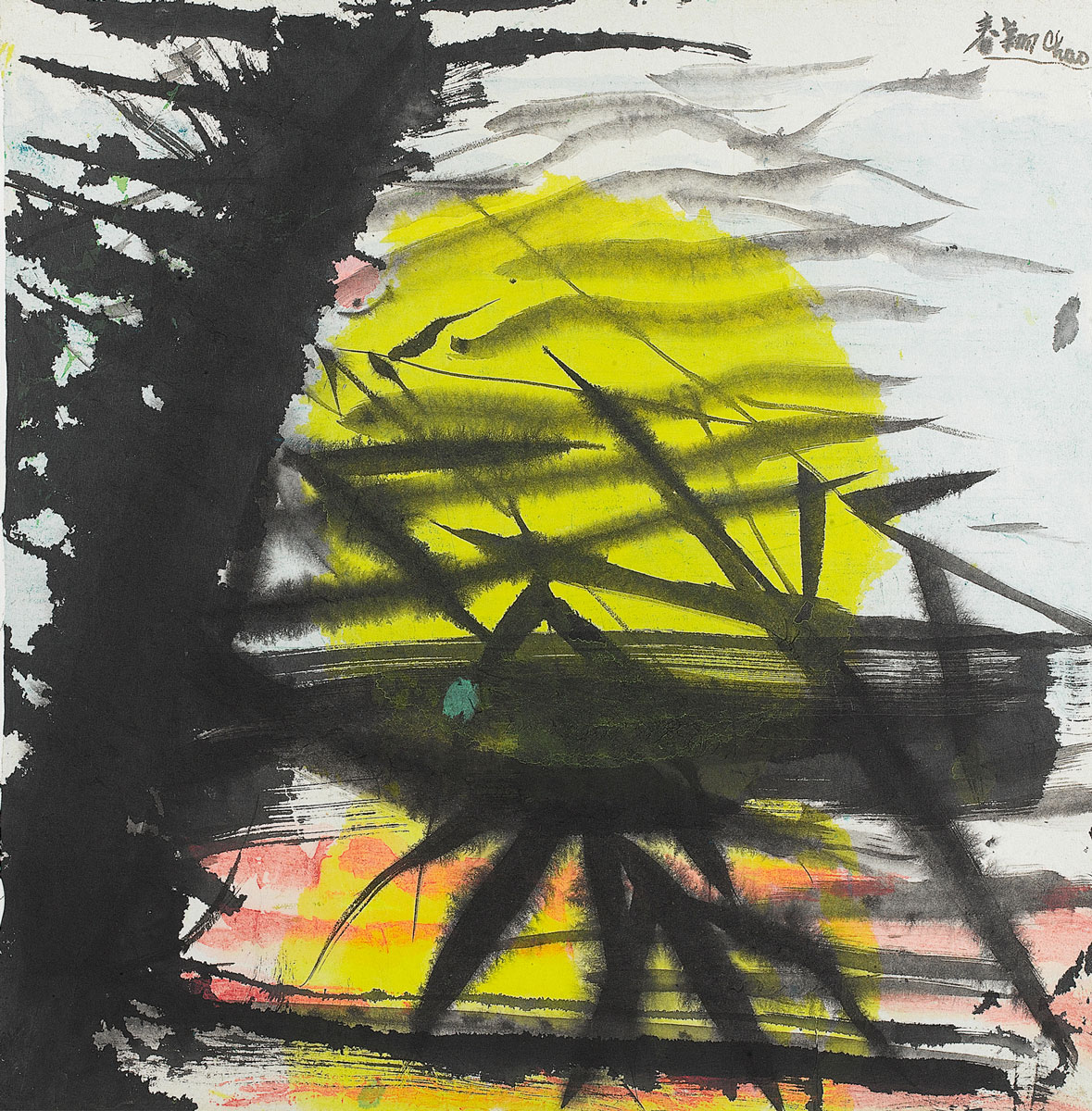
Chao Chung Hsiang (Born in 1918, Henan Province, China), Flowing Moon, undated, Chinese ink & acrylic on paper, 29 x 28 ½ in. (74 x 72 ½ cm). Courtesy Alisan Fine Arts
Alisan Fine Arts
Chao Chung-hsiang
September 12 – October 17, 2026
Opening Reception: Saturday, Sept 12, 2-5pm
120 East 65th Street, NYC
Celebrating 45 years of championing contemporary Chinese art in 2026, the gallery honors Chao Chung-hsiang, a vital part of its history since its early years. His work explores nature, spirituality, and abstraction through recurring imagery of flowers, fish, birds, and the cosmos. The exhibition highlights his striking black-and-white ink paintings alongside his renowned “hybrid paintings,” which combine vivid acrylics of birds and fish with traditional ink washes.
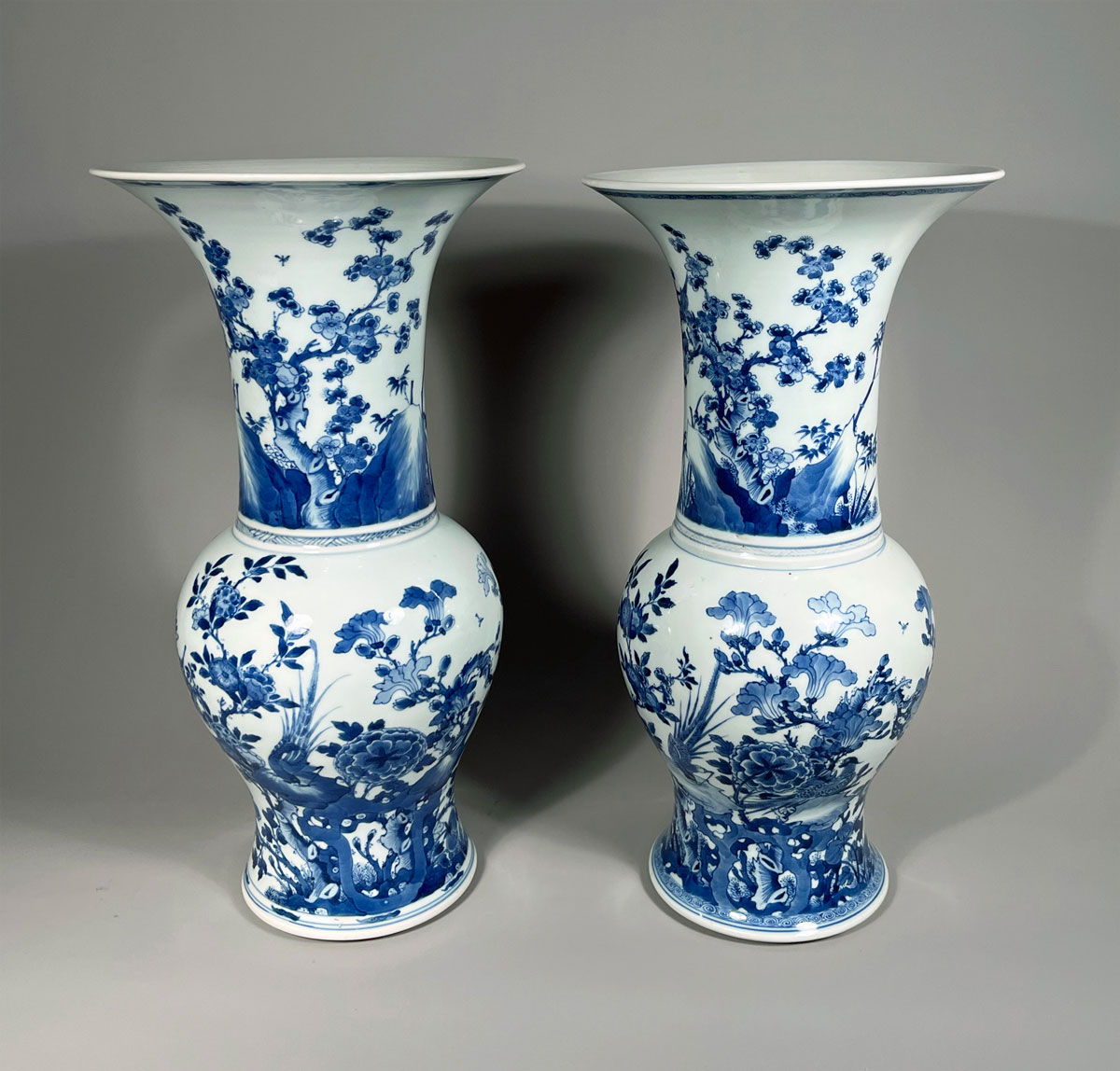
Pair of Chinese blue and white porcelain phoenix tail vases, Kangxi period, AD 1662-1722, height: 17 in. (43 cm). Courtesy Ralph M. Chait Galleries, Inc.
Ralph M. Chait Galleries, Inc.
Chinese Porcelain and Works of Art
September 10–18, 2026
16 East 52nd Street, 10th fl, NYC
This stunning exhibition has a wide purview but shines a spotlight on several masterpieces, primarily from private American collections. Among the highlights are a pair of Kangxi period,1662-1722, blue and white porcelain phoenix tail vases and a very rare pair of 18th century Chinese export porcelain figures of a gentleman and lady, beautifully decorated in famille rose enamels and clothed in designs indicative of their Chinese origin.

Li Fenggong 李鳳公 (1884-1967), Flower-Painting Lessons: Baimiao Demonstrations with Instructions; Student Studies with Vermilion Annotations 花卉白描課徒稿, ink and color on paper, two sets of albums, each leaf 9 3/4 x 12 3/4 in. (each leaf 24.6 x 32.3 cm). Courtesy Fu Qiumeng Fine Art
Fu Qiumeng Fine Art
A Well of Rouge, a Flower of Fortune: Teaching and Learning in Chinese Flower Painting
September 12 – October 31, 2026
65 E 80th St, Ground fl, NYC
At the heart of A Well of Rouge, a Flower of Fortune: Teaching and Learning in Chinese Flower Painting are Li Fenggong’s flower-painting lessons: baimiao, or “outline drawing,” demonstrations accompanied by written instructions, alongside student studies bearing his vermilion annotations. These are presented with more than ten flower paintings spanning the Ming and Qing dynasties through the modern period. Following two interwoven threads, the ke (lesson), encompassing demonstration and correction, and the pu (lineage), tracing transmission across artistic schools, the exhibition offers an intimate look at how Chinese bird-and-flower painting was taught and passed from teacher to student across generations, eventually crossing the sea to take root in New York.
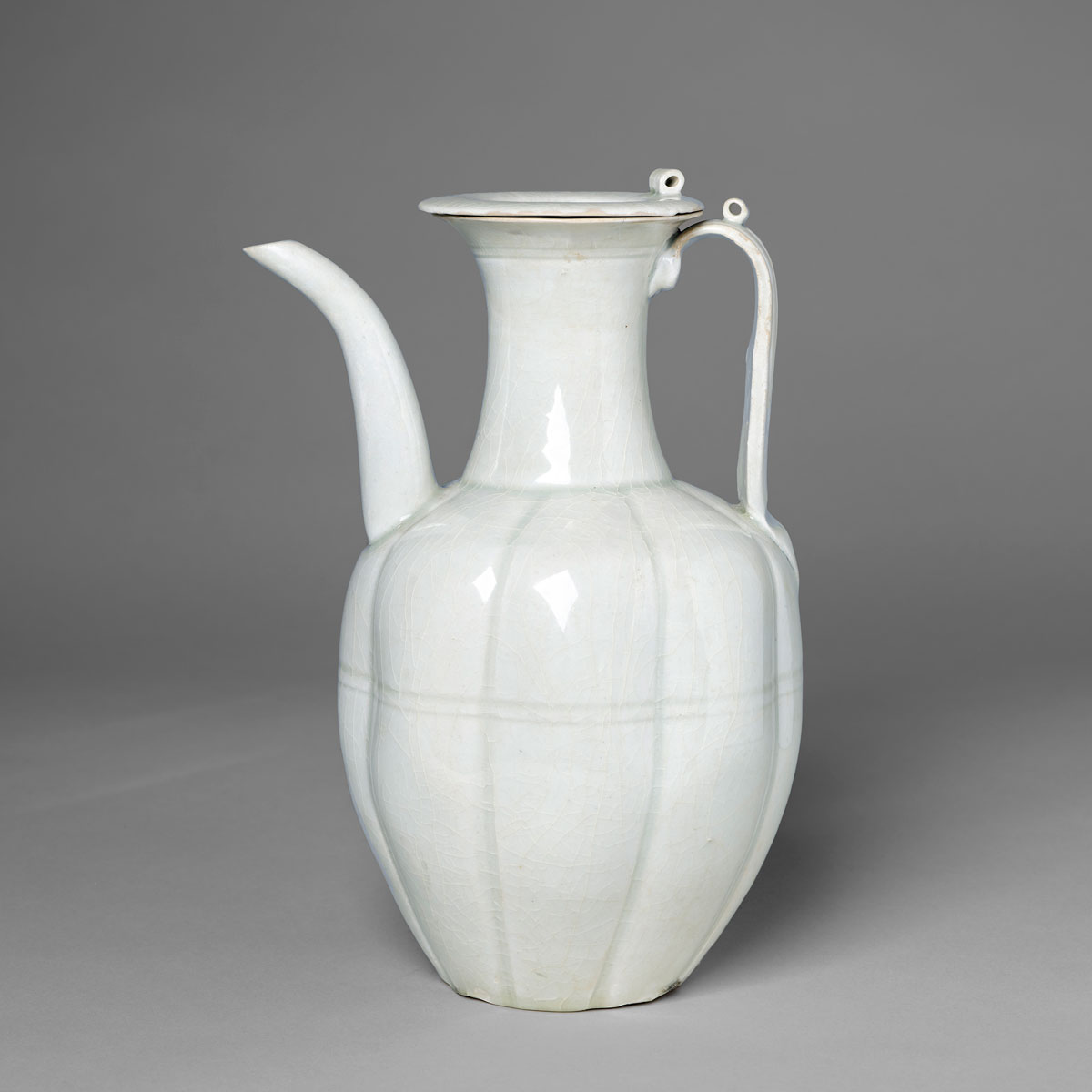
Large Qingbai Lobed Ewer and Cover, Song Dynasty 960-1279 AD, China, height: 24.2 cm. Courtesy Zetterquist Galleries
Zetterquist Galleries
Chinese and Japanese Ceramics
September 10–18, 2026
3 East 66th Street, 2nd fl, NYC
This Autumn, an exceptional cross-section of Chinese and Japanese Ceramics spans centuries, from Kofun- and Edo-period Japanese works to 20th-century masterpieces by Kawai Kanjiro, Shimaoka Tatsuzo, Yagi Akira, and Takiguchi Kazuo. Highlights include a Haniwa warrior head, 6th-century Sueki wares, an elegant Oribe tea bowl, and a fine Nabeshima polychrome plate. Among the Chinese works, a large Song Dynasty Qingbai lobed ewer and cover, formerly in a private Japanese collection, stands out as a particular highlight.
Ancient and/or Contemporary Japanese Art

Kiyomizu Rokubei VIII, Sculpture “Kiseki” 1230-C (Sculpture), stoneware, 5 7/8 × 14 3/8 × 14 in. (15 × 36.5 × 35.5 cm). Courtesy Dai Ichi Arts, Ltd.
Dai Ichi Arts, Ltd.
Kiyomizu Rokubei: 250 years of Ceramic Expression from Kyoto
September 10–24, 2026
Opening Reception with Kiyomizu Rokubei VIII: Thursday, Sept 10, 2026
18 East 64th Street, Suite 1F, NYC
Their fall presentation features an alluring selection of works by the fifth through eighth generations of one of Japan’s most distinguished ceramic dynasties. Based in Kyoto since the mid-Edo period, the Rokubei lineage has endured through continual reinvention, with each generation responding to the artistic and technological developments of its time. The exhibition traces this evolution from the fifth and sixth generations’ experiments with glaze, painted decoration, and classical references to the sculptural, architecturally informed slab-built forms of the seventh and eighth generations.
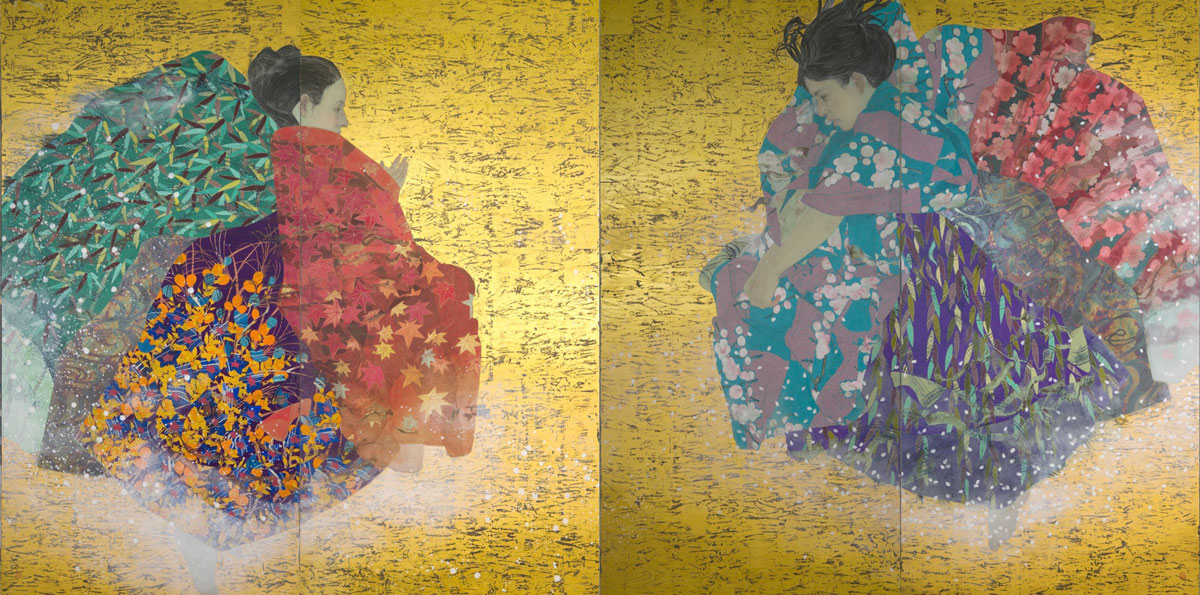
Kaori Someya, Pictures of Seasonal Changes in Dress, 2026, pair of two-panel folding screens: gold leaf, silver leaf, mineral pigments, dye, washi paper, and animal glue, H70 7/8 x W141 3/4 x D3/4 in. overall (H180 x W360 x D2 cm overall). Photo: copyright the artist. Courtesy Ippodo Gallery
Ippodo Gallery
Kaori Someya: The Light Within
September 10 – October 17, 2026
Opening Reception with Artist: Thursday, Sept 10, 5-8pm (kindly RSVP)
Artist Talk: Saturday, Sept 12, 1:30-3pm (kindly RSVP)
35 N Moore Street, NYC
Tokyo-based Nihonga painter Someya works in the thousand-year-old technique of urahaku, backing translucent washi with gold and platinum leaf to create an inner luminosity. Her portraits of women in richly patterned kimono explore the tension between social expectations and personal identity. The exhibition features more than a dozen new works, including Pictures of Seasonal Changes in Dress, a striking folding screen that juxtaposes quiet contemplation with vibrant color and shimmering gold.

Iguchi Daisuke (b. 1975), Ash-coated vessel with silver slip, 2026, glazed stoneware, 11 x 16 1/4 x 13 in. Photography by Yano Tsutsumi. Courtesy Joan B Mirviss LTD
Joan B Mirviss LTD
Patina of Time
September 10–18, 2026
39 East 78th Street, 4th fl, NYC
This long-anticipated solo exhibition presents new works by Iguchi Daisuke, created specifically for the occasion, a decade after his highly successful international debut at the gallery. A native of northeastern Japan, Iguchi creates sculptural vessels in the tradition of the region’s most renowned ceramic masters, Kamoda Shōji and Wada Morihiro. With linear patterns that undulate in perfect harmony with the gently curving and occasionally lobed vessel forms they adorn, Iguchi’s work carries on the legacy of ceramics that unify surface and form. He has developed a unique process to create weathered and eroded textures on his vessel forms, and he juxtaposes this with metallic surface patterns characterized by mathematical precision.

Onihira Keiji, Makie Box, Ōmurasaki between Sun and Shade, 2025, dry lacquer with white mother-of-pearl, jewel beetle wings, eggshell, gold, silver, platinum, pigments, 6 ¾ × 11 × 5 ⅞ in. (17.1 × 28.2 × 14.8 cm). Courtesy Onishi Gallery
Onishi Gallery
Homo Faber–Man the Maker
September 10–30, 2026
Opening Reception: Thursday, Sept 10, 5-8pm
Gallery Talk by Xiaohan Du: Saturday, Sept 12 at 3pm
16 East 79th Street, NYC
Celebrating its 20th anniversary, this exhibition brings together ten contemporary artists who reimagine Japanese traditions through fresh perspectives. Among them are Kaneshige Kosuke, Rusu Aki, Konno Tomoko, Onihira Keiji, and Noguchi Ken, who work with materials ranging from gold and silver to eggshell and seashells. Together, their works reveal the transformative possibilities of art and the evolving dialogue between tradition and contemporary expression.

Kawase Hasui (1883-1957), Twenty Views of Tokyo: Shiba Zojo Temple, 1925, woodblock print, 15 1/4 x 10 3/8 in. (38.6 x 26.5 cm). Courtesy Scholten Japanese Art
Scholten Japanese Art
The León Chattah Collection of Modern Japanese Prints
September 10 –18, 2026
145 West 58th Street, Suite 6D, NYC
The gallery is proud to present approximately 60 works by 20th-century shin hanga masters from the recently rediscovered collection of León Chattah (1934–2025), a remarkable “capsule collection” tucked away in a New York City apartment since the early 1980s. Among the highlights is Kawase Hasui’s iconic Snow at Zojoji Temple, a serene winter scene that has become one of the most celebrated Japanese woodblock prints of the 20th century.

Kiyoshi Hamada, DRAWING (2), 1985, paper, pencil, 102.4 x 44.5 in. (260 x 113 cm). Courtesy SEIZAN Gallery New York
SEIZAN Gallery
Kiyoshi Hamada: Gazing Into Stillness—Works 1975–2026
September 10 – November 7, 2026
Opening Reception: Thursday, Sept 10, 6-8pm
525 West 26th Street, NYC
Kiyoshi Hamada’s solo exhibition spans five decades, from 1975 to the present, tracing the evolution of his distinctive practice. From his early red-line plywood paintings of the mid-1970s and meditative DRAWING series started in the 1980s to layered, carved paintings and recent ink works, the exhibition reveals Hamada’s enduring exploration of time, material, and process.

Kobayashi Minminsai I, Ohanaike (Flower Vessel), 1770-1779, madake bamboo, rattan, 14.75 x 8.75 x 7.5 in.. Image credit: Mankus Photography. Courtesy TAI Modern
TAI Modern
Sencha to Sculpture: The Evolution of Japanese Bamboo Art to the 1960s
August 28 – October 10, 2026
Opening Reception: Friday, Aug 28, 5-7pm
Speaker Series: Saturday, Aug 29 at 2pm & Saturday, Sept 5 at 2pm
1601 Paseo de Peralta, Santa Fe, NM
At its Santa-Fe based gallery, this exhibition follows the transformation of Japanese bamboo art from tea ceremony utensils to sculptural form. The first of a planned three-part series, it brings together nearly 50 works, including pieces from the Minminsai lineage and a signed basket by Kobayashi Minminsai I (d. 1791). Predating the work of Hayakawa Shokosai I, long considered the first Japanese bamboo artist to sign his work, the basket establishes Minminsai I as the earliest confirmed signer in the medium’s history.

Places Along the Tokaido, early Edo period, ca 1620, Japan, pair of six-panel folding screens, ink, mineral colors, shell powder, and gold on paper with gold leaf, size each screen: 47 x 110½ in. (119.5 x 280.5 cm). Courtesy Thomsen Gallery
Thomsen Gallery
Japanese Masterpieces 17th–21st Centuries
September 10–18, 2026
8 East 67th Street, NYC
This Autumn presentation brings together an exceptional selection of Japanese art, including an early 17th-century screen depicting life at the Chinese imperial court and paired screens of the Tokaido Road. Highlights also include a gold-leaf screen of cherry blossoms and maple from the early 1800s, paintings by Taisho and early Showa masters such as Yamamoto Shunkyo and Kikuchi Keigetsu, and exquisite ikebana baskets by renowned bamboo artists. Modern and contemporary bronzes round out this rich exploration of Japanese artistic traditions.
Ancient and/or Contemporary Korean Art

Sang-lan Kim, “Genesis 7-26,” 2026, jumtchi, mulberry paper, 23 3/4 x 15 3/4 in. (60.5 x 40 cm.). Courtesy HK Art & Antiques, LLC
HK Arts & Antiques LLC
Painters and Their Portraits: Four Women Artists from Korea, Europe and the United States
September 10–18, 2026
8 East 67th Street, Ground Fl, NYC
This group exhibition brings together four exceptional women artists—Ouhi Cha, Myong Hi Kim, Kim Sanglan, and Cornelia Thomsen—whose practices span Korea, Germany, France, and the United States. Working across painting, sculpture, installation, and drawing, they explore the creative possibilities of living between cultures, balancing East and West, past and present, and the personal and historical.
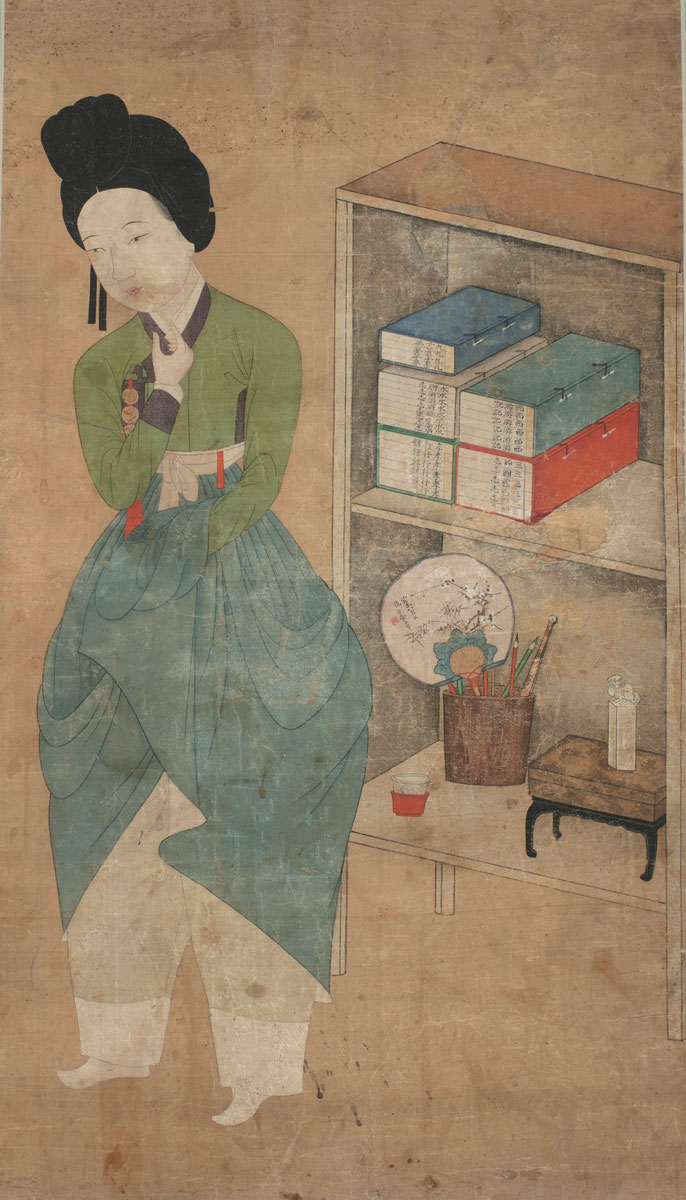
Jang Shiheung (1714‒after 1789), Young Woman by a Bookcase with Fan, Korea, Joseon Dynasty (1392−1897), hanging scroll: ink, color, and gold pigment on silk, 29⅞ x 17⅛ in. (76 x 43.5 cm), from a set of four paintings of virtuous women, signed: Bangho ja and dated 8/1763. Courtesy Sebastian Izzard LLC Asian Art
Sebastian Izzard LLC Asian Art
Meritorious Men and Virtuous Women: Five Important Eighteenth Century Korean Paintings
September 28 − October 9, 2026
17 East 76th Street, 3rd fl, NYC
Pivoting from Japanese to Korean art this fall, the gallery’s presentation unveils a rare and remarkable group of late Joseon Dynasty figure paintings. At its heart are four exceptional works by Jang Shiheung depicting virtuous women—an extraordinary subject at a time when the private lives of upper-class women were rarely represented. Their monumental figures, vivid pigments, and luminous touches of gold further heighten the impact and significance of these paintings.

Maia Ruth Lee, B.B.Scale 1–2, 2026, acrylic on canvas, 25 1/4 x 98 in. (64.1 x 248.9 cm). Photo: Hyunjung Rhee. Courtesy the artist and Tina Kim Gallery
Tina Kim Gallery
Maia Ruth Lee: Double Vision
September 10 – October 24, 2026
Opening Reception: Thursday, Sept 10, 6-8pm
525 West 21st Street, NYC
Bringing together new paintings from Maia Ruth Lee’s ongoing Bondage Baggage series with sculpture, video, and installation, the exhibition offers a powerful meditation on migration and the experience of seeing the world through multiple perspectives. Inspired by Homi Bhabha and Salman Rushdie’s concept of “double vision,” Lee explores how memory, language, and lived experience intersect across places and cultures, creating works that embrace contradiction, displacement, and transformation.
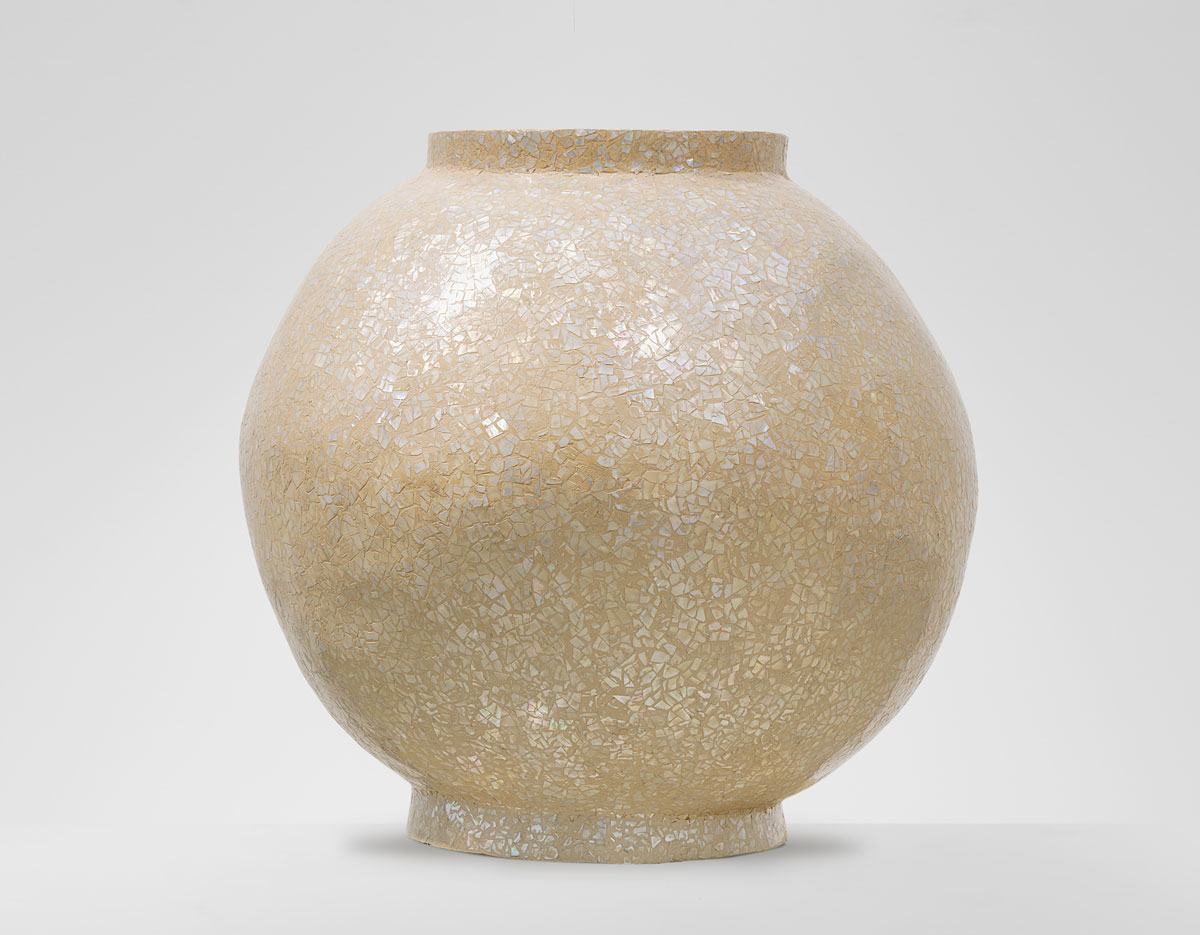
Hijo Nam, Full Moon, 2019, ottchil (dry lacquer), hemp, glutinous rice, mother-of-pearl, clay powder, 65 × 63 × 65 cm. Courtesy the artist and Space 776
Space 776
HIJO NAM: Between Time and Being
September 4–27, 2026
Opening Reception: Friday, Sept. 4, 2026
37 Clinton Street, NYC
The gallery presents Between Time and Being, a solo exhibition by New York–based Korean artist Hijo Nam. Bringing together textile works, lacquer sculpture, painting, and mixed media, the exhibition explores how time, memory, and relationships shape human existence. Presented in dialogue with Nam’s concurrent exhibition at SPACE776 Seoul, the works take on new meaning as they move between two cities, spaces, and audiences.
These two galleries outside New York are presenting exhibitions of their works on their respective websites:
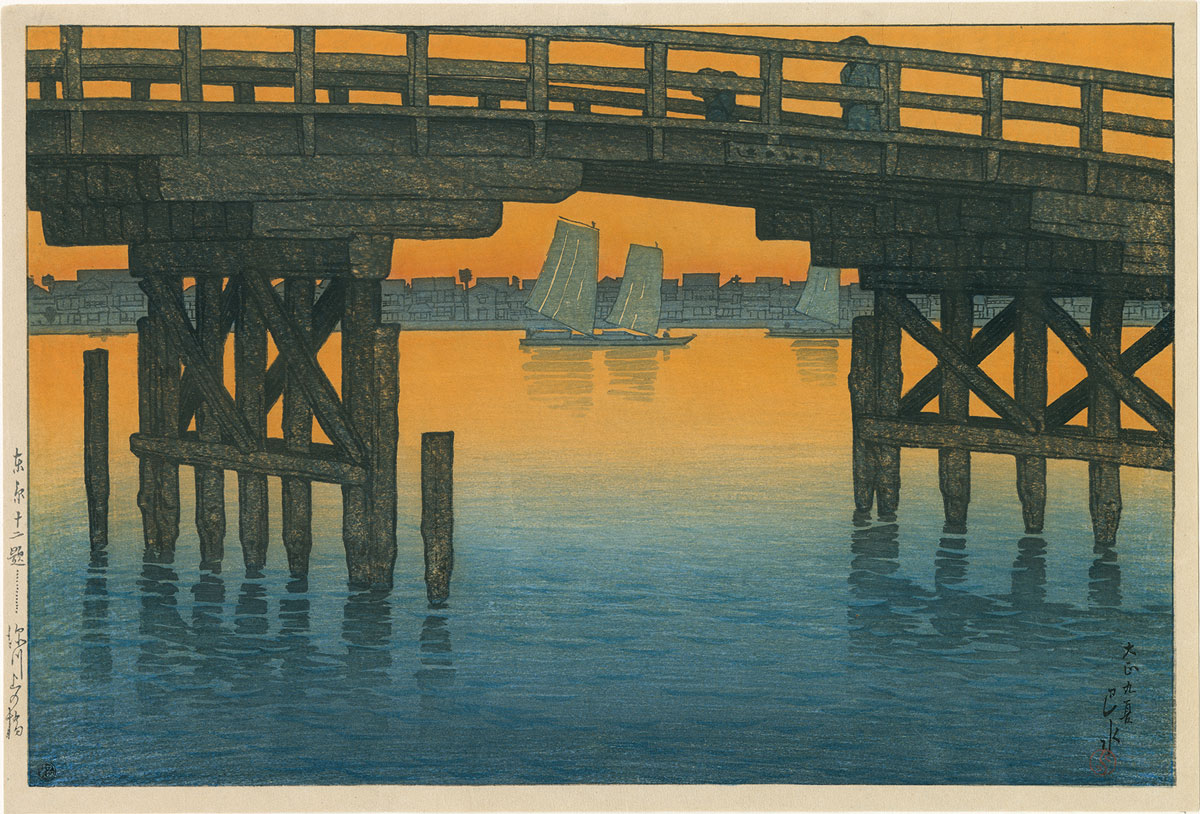
Kawase Hasui (1883–1957), Kamino Bridge, Fukagawa; Series: Twelve Subjects of Tokyo, 1920 Courtesy Egenolf Gallery Japanese Prints
Egenolf Gallery Japanese Prints
New and Creative: Japanese Prints from the 20th Century
September 11–18, 2026
Online only at www.egenolfgallery.com
The gallery’s online presentation showcases works by shin-hanga (new prints) masters Kawase Hasui and Ohara Koson alongside a selection from the innovative sosaku hanga (creative prints) movement. A standout is an unusually rare, pre-earthquake Hasui print from Selection of Scenes of Japan, featuring delicately rendered figures, fishing boats, and the spa town of Beppu set against distant violet-blue mountains. A beautiful example of Hasui’s evocative approach to the Japanese landscape.

Maharaja Raj Singh and His Grandson Bhavani Singh in Procession, Madhya Pradesh, Sitamau, signed by Pyar Chand of Mandsaor, October 1847, opaque pigments and gold on paper, 35 x 47 cm (including border). Courtesy Francesca Galloway
Francesca Galloway
Observed & Imagined Indian Painting 17th – 19th Century
September 2026
Online only at www.francescagalloway.com
The gallery is pleased to present a selection of important Indian paintings in a printed publication. The works on paper, a small group of which come from a private English collection, have been researched and written about by John Seyller and other scholars.Exploring themes of devotion, kingship, and narrative, the selection features the remarkable Maharaja Raj Singh and His Grandson Bhavani Singh in Procession (1847), a rare example of painting from Sitamau, an important yet little-known center of Rajput art. Signed by Pyar Chand, one of only three known Sitamau artists, the work is distinguished by its brilliant color and bold, abstract composition.