Ippodo Gallery Debuts at FOG Design+Art

Ippodo_FOG2026

FOG Design + Art
Shaped by Nature
January 21–25, 2026
Fort Mason Center for Arts & Culture, San Francisco

Ippodo Gallery is delighted to present Shaped by Nature for their debut at San Francisco’s FOG Design + Art, a curated selection of works by leading contemporary Japanese artists exploring the potential of nature channeled by human hands. Rooted in centuries of craft and the symbols of Japan, these artworks reveal how materials drawn from the earth are shaped through personal inspiration and time-honored mastery.

Shaped by Nature synthesizes the Japanese garden—water, stone, trees, and moss existing in quiet balance—where humans and nature are deeply entwined. The rhythm of the seasons, reverence for the gifts of the earth, and attention to subtle changes carry visibly through each artwork.

This debut exhibition invites engagement of the five senses with kōgei (fine art craft) and offers craft as a living practice interpreted by each artist as the harmony between nature and humanity.

Twenty-three artists are featured in the exhibition, including Noriyuki Furutani, Tomoyuki Hoshino, Agnes Husz, Terumasa Ikeda, Takeshi Imaizumi, Hajime & Yasuo Ishikura, Hiromi Itabashi, Yukiya Izumita, KAKU, Sho Kishino, Hirotomi Maeda, Masahiro Maeda, Ryoji Koie, Ken Matsubara, Mitsukuni Misaki, Jihei Murase, Tsuneo Nakazawa, Shota Suzuki, Kai Tsujimura, Midori Tsukada, Kodai Ujiie, Soyo & Shodo Yamagishi, and Kan Yasuda.

They look forward to welcoming you soon in San Francisco!

To learn more, click here.

• • •

Asia Week New York and The Winter Show Present a Special Panel Discussion

The Winter Show 2026

George E. Ohr (1857–1918), Glazed earthenware, c. 1898, Newark Museum of Art, 18.27

Asia Week New York in Partnership with The Winter Show Presents:
Shaping Taste: Asian Ceramics and the Making of American Art & Design
Saturday, January 24 at 2:30pm
In-person event, Park Avenue Armory, Board of Officers Room
643 Park Avenue, NYC
Registration required; complimentary for all Winter Show ticket holders

We are delighted to once again partner with The Winter Show to present a captivating in-person discussion with an esteemed panel of experts. Shaping Taste: Asian Ceramics and the Making of American Art & Design brings together leading curators and historians of decorative arts from four American museums to explore the enduring impact of Asian ceramics on American art and design from the nineteenth century to the present.

Panelists will discuss the early influence that nineteenth- and early twentieth-century American collectors of Asian ceramics, such as Frank Brinkley and Charles Stewart Smith, had on Western understandings of the medium. They will also examine how classical Asian forms and surface ornament have resonated across American design in a wide range of media, from the studio pottery of Rookwood to the metalwork of Gorham and Tiffany.

The discussion then moves into the mid-twentieth century and beyond, tracing the dynamic, reciprocal exchanges between seminal ceramic artists in Japan and the United States—including figures such as Yagi Kazuo and Peter Voulkos—and the lasting ways in which American museum collections of Asian ceramics continue to inform contemporary artistic practice across Asia and the West.

The Distinguished Panel of Experts Include:

Glenn Adamson, Independent Curator, Writer and Historian

David L. Barquist, H. Richard Dietrich, Jr., Curator of American Decorative Arts, Philadelphia Art Museum

Monika Bincsik, Diane and Arthur Abbey Curator for Japanese Decorative Arts, The Metropolitan Museum of Art

Ulysses Grant Dietz, Chief Curator, Emeritus, The Newark Museum of Art

Elizabeth A. Williams, David and Peggy Rockefeller Curator of Decorative Arts and Design, RISD Museum

Moderated by Joan B Mirviss, President, Joan B Mirviss LTD and Art Historian

Advanced registration is recommended and complimentary for all Winter Show ticket holders, so be sure to secure your spot by registering here today!

TheWinterShowTureen
Gorham Manufacturing Company, American (1831-present), Tureen, 1884, silver,
6 11/16 x 10 7/8 x 8 1/8 inches (17 x 27.7 x 20.7 cm) (overall). Gift of Mrs. Pierre Brunschwig, RISD Museum, 81.072ab

This year’s The Winter Show runs from January 23 to February 1 in the Park Avenue Armory in New York City. Among the many outstanding exhibitors are Asia Week New York members Ralph M. Chait Galleries, Joan B Mirviss LTD and Thomsen Gallery.  We look forward to welcoming you soon to this celebration of art, antiques and culture!

To purchase tickets to The Winter Show, click here.

• • •

Alisan Fine Arts Welcome the New Year with Two Solo Exhibitions

Alisan_TwoExhibits2026

(L): Cui Fei, Study for Vermicular Calligraphy XIV (detail), 2025, ink rubbing on rice paper, 24 x 8 x 4 ½ in (61 x 20.5 x 11.5 cm) (R): Chiang Yomei, Unborn and Unceasing (4) (detail), 2025, sand, incense ash & oil on canvas, 40 in (101.5 cm) diam

Cui Fei: Vermicular Calligraphy
Chiang Yomei: Moon on the Water
January 15 – March 7, 2026
Opening Reception: Thursday, January 15, 6-8pm

120 East 65th Street, NYC

Alisan Fine Arts is excited to to inaugurate the new year with two concurrent solo exhibitions—Cui Fei: Vermicular Calligraphy and Chiang Yomei: Moon on the Water—on view from January 15 through March 7.

Vermicular Calligraphy presents a significant body of work by Cui Fei, representing the culmination of years of meticulous artistic development. The exhibition deepens his exploration of asemic writing, drawing inspiration from natural forms and organic movement.

Moon on the Water marks Chiang Yomei’s first solo exhibition in the United States. Featuring works from her ongoing Lotus and Waking Dream series, the exhibition reflects the artist’s engagement with Buddhist philosophy and psychological inquiry.

Alisan Fine Arts warmly invites you to join them for the opening receptions on Thursday evening, January 15, to celebrate these two exceptional exhibitions!

To learn more, click here.

• • •

JASA Presents Lyrically Rebellious— a Zoom Webinar on Onchi Kōshirō

JASA_Lyrically-Zoom-

Onchi Kōshirō (1891–1955), Object No. 1, 1954, woodblock print; ink and color on paper. Honolulu Museum of Art: Gift of James A. Michener, 1991 (21602)

Lyrically Rebellious: The Prints of Onchi Kōshirō
Tuesday, January 13, 2026 at 5pm EST
Zoom Webinar

The Japanese Art Society of America is pleased to present their next live Zoom webinar, Lyrically Rebellious: The Prints of Onchi Kōshirō on Tuesday, January 13 at 5pm EST.  Stephen Salel, curator of Japanese Art at the Honolulu Museum of Art, will discuss an exhibition currently on view that commemorates the 70th anniversary of the death of Onchi Koshirō (1891–1955), the leader of the Creative Prints (sōsaku hanga) movement and one of Japan’s first abstract artists.

Thanks to the generosity of Honolulu-based collectors such as James Michener (1907–1997) and Oliver Statler (1915–2002), the Honolulu Museum of Art possesses the largest public collection of prints by Onchi outside of Japan, offering a rare and intimate look at his work.

Don’t miss this fascinating discussion—register today to secure your spot!

To learn more and register, click here.

• • •

Last Days of Nusantara: Six Centuries of Indonesian Textiles at Yale University Art Gallery

Yale_Indonesian-Install

Installation view, Nusantara: Six Centuries of Indonesian Textiles

Nusantara: Six Centuries of Indonesian Textiles
Closing Sunday,  January 11, 2026

This is the last week to catch Nusantara: Six Centuries of Indonesian Textiles at the Yale University Art Gallery before it closes January 11. This exceptional exhibition celebrates one of Southeast Asia’s greatest artistic traditions: woven textiles. Exploring the ancient interisland links found in this culturally diverse maritime region, the exhibition features a wide array of textiles from the 14th to the 20th century drawn from the Yale University Art Gallery’s notable holdings—from the batiks of Java to the ikat of Sumba, and from ceremonial cloths and ritual weavings to clothing, shrouds, and architectural hangings. Especially significant are several early textiles that are intricately patterned with tie-dyed designs, while select three-dimensional objects, such as sculptures, headgear, and combs, are also included to provide context. Nusantara—from the original name for the Indonesian archipelago—offers a broad overview of the rich imagery and technical mastery of this remarkable art form.

Also check out their free, digital publication, Indonesian Textiles at the Yale University Art Gallery, that catalogues the museum’s vast collection of approximately 1,200 textiles from maritime Southeast Asia.

Be sure to experience this extraordinary exhibition before it concludes!

To learn more, click here.

• • •

Discover New York New Ink! at Korean Cultural Center NY

KCCNYInk

New York New Ink!
January 10 – 30, 2026
Opening Reception: Friday, Jan 9, 2026

The Korean Cultural Center New York is thrilled to present New York New Ink!, opening January 10. This exhibition brings together eight leading artists — Han Young Sup, Jeong Gwanghee, Kang Un, Kay Yoon, Kim Sang Yeon, Koo Seoungyoun, Lee Lee Nam, and Sul Park — who reinterpret the philosophy, materiality, and spirit of Korean ink through photography, installation, video, and contemporary abstraction. New York New Ink! continues and expands upon the Jeonnam International Sumuk Biennale, offering a fresh, global perspective on sumukhwa (ink painting).

Revisiting the history and artistic significance of sumukhwa (ink painting) is an act of rightful reclamation. Presented in New York — the epicenter of contemporary art — the exhibition seeks to reintroduce the spirituality and visual language of East Asian aesthetics into an art history long shaped by Western-centric narratives.

New York New Ink! becomes a site of convergence, where East meets West, memory meets modernity, and philosophy meets form. Rooted in Jeollanam-do, a region shaped by Korea’s democratization movement, the exhibition transforms historical scars into aesthetic and spiritual resonance. Here, ink — as both matter and metaphor — continues to embody the ethics and vitality of life itself.

Through their engagement with sumuk as both conceptual and material practice, the eight artists explore questions of memory, place, temporality, and transformation. By bridging past and present, local and global, the exhibition fosters a new aesthetic discourse grounded in East Asian cultural sensibilities while responding to the urgencies of the contemporary world.

To learn more, click here.

• • •

Welcoming the Peabody Essex Museum

PEM_ChineseHome

Yin Yu Tang: A Chinese Home, interior. Photo by Dennis Helmar.

Asia Week New York is excited to welcome the Peabody Essex Museum (PEM) to our network of world-class institutions. Founded in 1799 as the East India Marine Society—an organization of sea captains who collected works of art and culture during their global voyages—PEM is rooted in a legacy of international exchange and curiosity about the wider world. Today, the museum remains dedicated to presenting art within its broader cultural context, linking past and present while celebrating creativity across time and geography. With exceptionally rich holdings in art, history, architecture, decorative arts, and photography, displayed in both historic and contemporary spaces, PEM holds the distinction of being the oldest continuously operating and collecting museum in the United States.

PEM’s Asian art collections are among the most significant in the nation, reflecting New England’s longstanding maritime connections with China, Japan, Korea, and beyond. Highlights include major holdings of Chinese export art, the extraordinary Qing-dynasty merchant’s house Yin Yu Tang—carefully relocated and reassembled on the museum’s campus—important Japanese works shaped by the pioneering scholarship of Edward Sylvester Morse, and one of the earliest Korean art collections in the United States. Together, these collections illuminate centuries of artistic exchange and cultural encounter between Asia and the West.

Discover the Peabody Essex Museum for yourself and immerse yourself in its captivating exhibitions and extraordinary displays. Highlights currently on view include:

Yin Yu Tang: A Chinese Home
Ongoing

During the Qing Dynasty (1644–1911), a prosperous merchant named Huang built a stately 16-bedroom house in China’s southeastern Huizhou region, calling his home Yin Yu Tang, meaning “Hall of Plentiful Shelter.” The house was home to the Huang family for more than 200 years until the last descendants moved from the village in 1982. In the 1990s, as part of a mutually beneficial cultural exchange, the home and its contents were carefully dismantled and transported to Massachusetts for eventual installation on PEM’s campus. Over the course of seven years, a team of museum curators and educators working in concert with preservation architects and traditional Chinese and American craftspeople re-erected the home. In 2003, Yin Yu Tang opened to visitors, telling the complex story of its past and recent history and transforming it from a multigenerational family residence to a historic house in a museum setting at PEM.

Learn more about Yin Yu Tang here.

Double Happiness: Celebration in Chinese Art
On view through May 3, 2026

Come and experience the liveliness of a drinking party, the opulence of a royal wedding and poetic evocation of spring on a delicate dish. Discover plants and animals, myths and symbols and decipher the Chinese character for “Double Happiness.” With more than 30 highlights from the museum’s wide-ranging Chinese collection spanning 3,000 years, this exhibition celebrates China’s artistic achievements crystallized in seasonal festivals, religious ceremonies and celebrations.

Learn more about Double Happiness here.

Anila Quayyum Agha: All the Flowers Are for Me
Ongoing

This luminous installation provides an opportunity to contemplate the differences and commonalities that shape our lives and relationships. Persian and Turkish architecture, textiles and miniature paintings inspire the precise, stylized floral forms that compose Anila Quayyum Agha’s sculptural chamber of light and shadow. This luminous installation provides an opportunity to contemplate the differences and commonalities that shape our lives and relationships.

Learn more about Anila Quayyum Agha here.

PEM_JingdezhenCrwowCup
Artists in Jingdezhen, China and Peter Wiber. Mounted crow cup, about 1610. Porcelain with gilded-silver. Anonymous gift, 2001. AE85461. Peabody Essex Museum. Photo by Dennis Helmar.

Asian Export Art

PEM’s Asian Export Art collection, foremost in the world, explores cross-cultural exchange as a catalyst for creativity and celebrates the interplay of commerce and creative expression. The gallery features more than 200 works of art made in diverse media by artists in China, Japan and South Asia. These transcultural objects demonstrate the beauty and ingenuity that can be created through blending artistic traditions, materials and technologies.

Learn more about this cross-cultural exchange here.

Korean Art

Explore one of the nation’s earliest and most historically significant museum collections of Korean art and culture. From the late Joseon dynasty (1392-1910) to today, PEM’s exceptional collection explores art, culture and life in Korea during a time of significant transition and global connection. PEM’s Korean Art gallery brings to life the compelling stories of early pioneers, presented alongside the museum’s renowned Korean textile collection, exquisite 19th-century paintings — including the Welcoming Banquet of the Governor of Pyeongan screen — and inspiring contemporary works by Nam June Paik and other Korean and Korean American artists.

Learn more about our Korean Art Collection here.

Japanese Art

PEM’s remarkably long relationship with Japan extends back more than 200 years. Encompassing everyday objects and the fine arts, the museum’s Japanese collection is distinguished for its range, from paintings and sculpture to decorative arts and costumes and textiles. Spanning Hokkaido in the North to Okinawa in the South, and prehistory to the present, these objects illuminate the varied artistic and cultural traditions of Japan. Toward the end of the 19th century, Edward Sylvester Morse, director of the Peabody Academy of Science (a precursor to PEM), became one of the first Western scholars to visit modern Japan after it opened to travelers. Morse was highly influential in encouraging American interest in Japanese art and culture, and helped create this remarkable Japanese collection.

Learn more about our Japanese Art Collection here.

South Asian Art

Explore two linked galleries that follow the thread of South Asian art through a shifting history of occupation and independence. Bridging myth with social and political history, the first gallery tells the story of nation-building and self-discovery through works by India’s most celebrated artistic geniuses of the 20th century. Following independence from British rule in 1947, artists in India aimed to uncover a visual language that was uniquely Indian in inspiration to convey their experiences, struggles, ambitions and dreams.

In the adjacent gallery, visitors find a selection of objects from the museum’s extensive collection of historical material from India. Focused primarily on the 19th century, the gallery considers India’s long and complex history of foreign occupation, and its troubling impact on the representation of Indian people in art. Featuring some of the earliest objects to come to PEM, including unfired clay sculpture, mica paintings and Kalighat paintings, the gallery considers and questions the timeless tropes of India that persist even today.

Learn more about our South Asian Art Colleciton here.
• • •

Asia Week New York Proudly Unveils Its 2026 Dealer Roster

2026-DealerRoster

Kawase Hasui (1883-1957), Spring Snow (Kiyomizu Temple, Kyoto) (Haru no yuki [Kyoto Kiyomizu]) (detail), 1932, oban tate-e 15 1/2 by 10 3/8 in. (39.4 by 26.4 cm); Courtesy Scholten Japanese Art

We are thrilled to announce the exceptional roster for Asia Week New York 2026, returning for its 17th year from March 19–27! This highly anticipated annual celebration continues to be the preeminent gathering for Asian art worldwide. It will showcase 25 esteemed galleries, including three online exhibitions, 27 museums, and six major auction houses—Bonhams, Christie’s, Doyle, Freeman’s, Heritage Auctions, and Sotheby’s,

This year’s programming marks the first with new leadership at the helm: Alice Teng, as Asia Week New York’s new Executive Director, and Margi Gristina, Asia Week New York’s New Chairperson. Both women have extensive experience and expertise in the field of Asian Art. “Asia Week New York is a spectacular opportunity to interact and engage with Asian art at the very heart of the Asian art market” said Margi Gristina, Asia Week New York’s New Chairperson. “While the organization has developed into offering year-round programming, it’s still anchored by this annual week each spring, which allows collectors, museum curators, and enthusiasts to convene at this major cultural platform and view the best of Asian art across categories.”

“Nearly two decades ago, a group of dedicated Asian art specialists came together to create Asia Week New York. Over the years, it has grown into a vibrant home away from home for dealers, collectors, and auction-goers alike,“ said Alice Teng, Asia Week New York’s New Executive Director. “I’m thrilled by the incredible works, both historical and contemporary, that will be on view, some for the first time this spring. It’s a rare opportunity to experience the depth and beauty of Asian art all at once.”

Asia Week New York will feature curated exhibitions from world-renowned dealers, live auctions, and expert-led panel discussions. The 2026 edition promises an inspiring array of treasures, from antiquities to contemporary masterpieces. Two new Affiliate Members, Francesca Galloway and Lark Mason Associates, will participate remotely with online exhibitions.

Asia Week New York continues to affirm the importance of Asian art in the cultural landscape. More information about programming will soon follow. Here is a first look at the list of participating dealers joining in New York, organized by specialty:

Chinese and Vietnamese Art

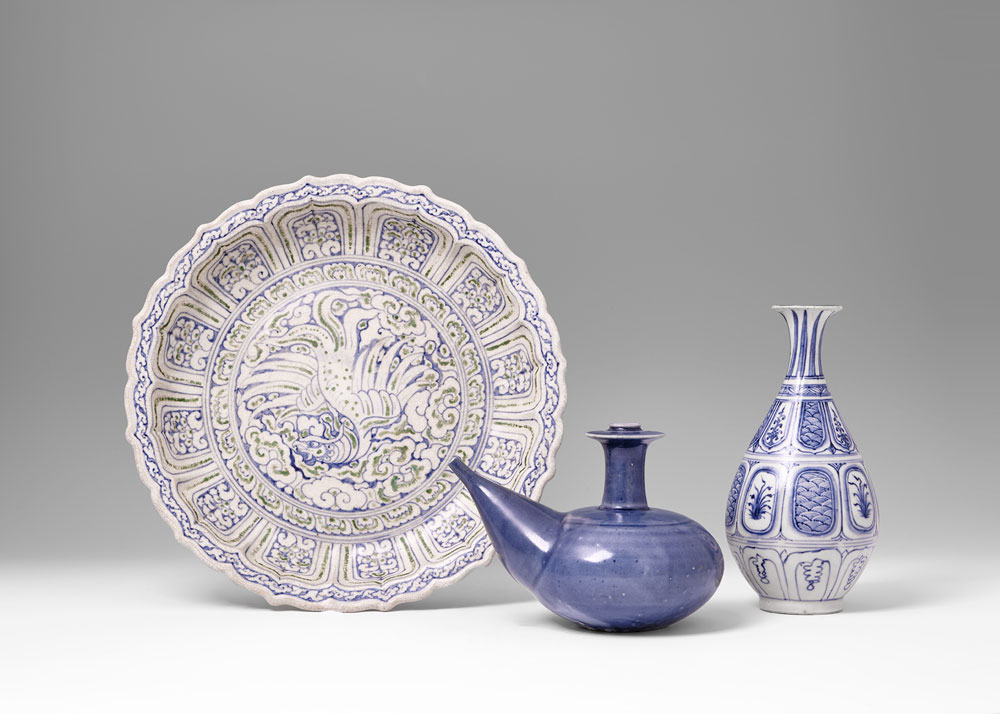
Press_Zetterquist_Group-of-Vietnamese-Pieces
Group of Vietnamese Ceramics 15th-16th century; Courtesy Zetterquist Galleries

Indian, Himalayan, and Southeast Asian Art

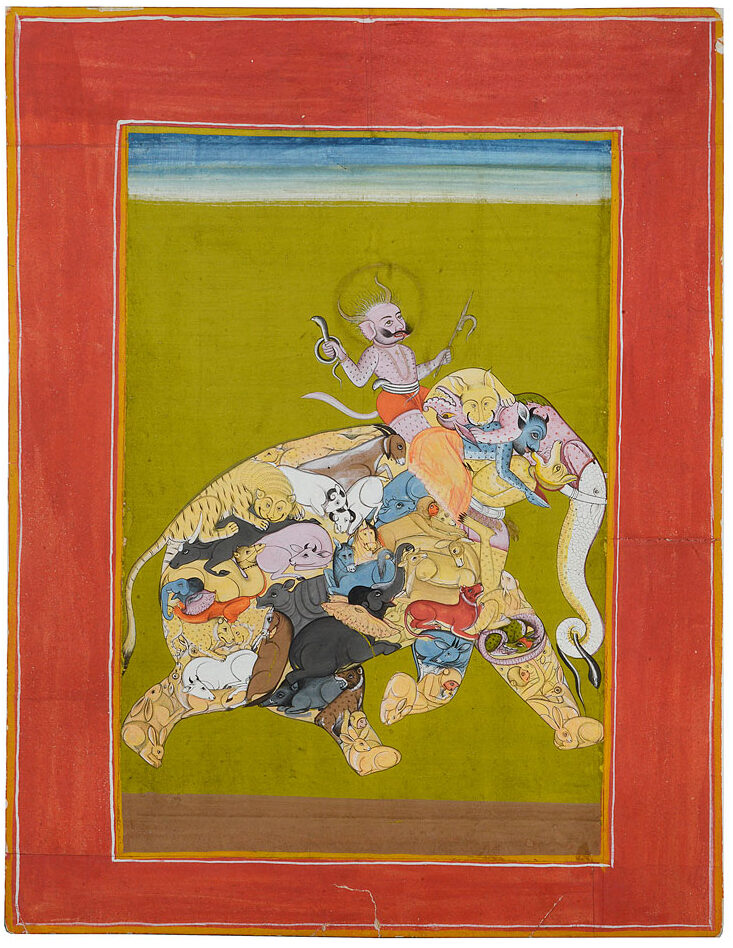
Press_Forge-and-Lynch_Composite-Elephant
Composite elephant Bikaner, Rajasthan, circa 1770, opaque pigments with gold on paper, 8 1/5 by 5 1/3 in. (20.8 by 13.6 cm) painting, 10 1/3 by 8 in. (27 by 20.4 cm) folio; Courtesy Oliver Forge and Brendan Lynch Ltd.

Japanese Art

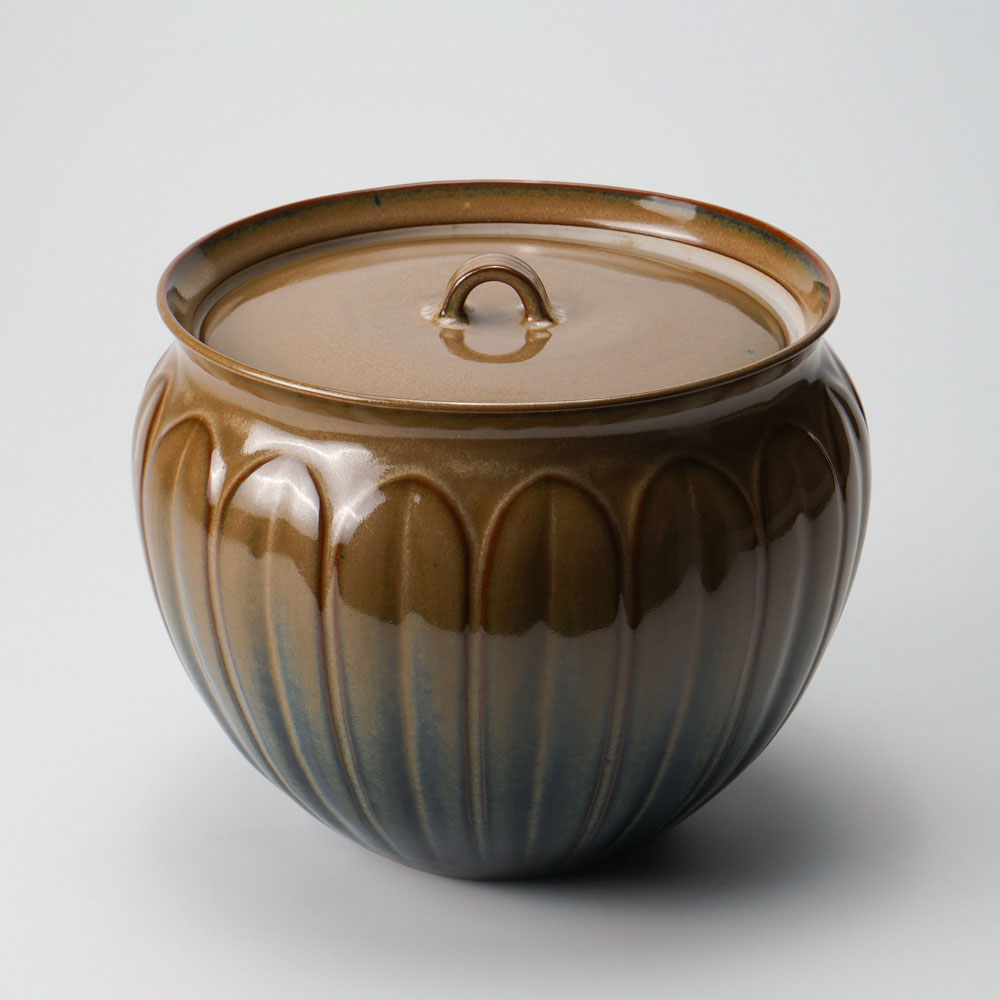
Press_Dai-Ichi-Arts_Water-Jar
Miyanohara Ken 宮之原 謙 (1898-1977), Chrysanthemum Water Jar (Mizusashi), glazed stoneware with signed wood box and sealed on the base: Ken 謙, H16 × W20 cm; Courtesy Dai Ichi Arts, Ltd.

Korean Art

Press_HKArtand-Antique-Cho
Cho Yong-ik (1934-2023), “69-631,” oil on canvas, 44 x 44 in. (111.76 x 111.76 cm.); Courtesy HK Art & Antiques LLC

• • •

Fu Qiumeng Fine Art Presents Under Heaven and Beyond Form: Celestial Tales of Tai Xiangzhou

FQM_Jan2026

Wang Mansheng, Golden Peaches 金桃, 2021, ink on newspaper, 19 x 12 in. (48.3 x 30.5 cm)

Under Heaven and Beyond Form: Celestial Tales of Tai Xiangzhou
January 3 – February 21, 2026
65 East 80th Street, NYC

Fu Qiumeng Fine Art is delighted to present their second solo exhibition with Tai Xiangzhou, Under Heaven and Beyond Form: Celestial Tales of Tai Xiangzhou. The exhibition brings together three significant series that span the artist’s career—Celestial Tales, The Milky Way, and Kunlun—juxtaposed to form a sustained dialogue. Taking ink as its conceptual and material foundation, the exhibition systematically traces Tai’s artistic inquiry into cosmological thought, material elements, and pictorial traditions, articulating his sustained engagement with the transformation of ink painting in a contemporary context.

Rooted in ancient Chinese cosmology and the historiography of landscape painting (shan shui), Tai Xiangzhou’s practice engages in parallel with contemporary scientific discourse. Rather than pursuing a mimetic representation of the natural world, Tai interrogates the internal pictorial structures, spatial logic, and metaphysical principles that underlie the Chinese landscape tradition, using them as a framework through which to articulate an understanding of cosmic order. Through three closely related series, the exhibition unfolds as a cumulative and stratified viewing experience.

Taken together, these works reveal Tai Xiangzhou’s practice as one that does not seek to reconcile tradition and the contemporary, but rather treats tradition as an active, generative framework. By repositioning ink painting as a site of cosmological inquiry and material experimentation, Under Heaven and Beyond Form: Celestial Tales of Tai Xiangzhou foregrounds ink not as a historical medium, but as an evolving system of thought capable of engaging both ancient philosophy and contemporary modes of understanding the universe.

To learn more, click here.

• • •

Welcoming a New Year Illuminated by the Splendor of Asian Art

Smithsonian_ZenanawithFireworks

Zenana scene with fireworks, 17th c., color and gold on paper, 11 13/16 x 10 7/8 in. (30 x 27.7 cm), Gift of Charles Lang Freer F1907.191, EDAN ID, Freer Gallery of Art Collection; Courtesy National Museum of Asian Art 

As we welcome the New Year of 2026, we celebrate the boundless creativity of artists and the lasting devotion of all who cherish the arts. May the year ahead be graced with joy, inspiration, and new beginnings, and may the enduring splendor of Asian art continue to enlighten, delight, and uplift us. From all of us at Asia Week New York, we wish you a truly remarkable New Year!

• • •