NEW EXHIBITION

Sarah Sze, Images in Translation, 2019, installed at Tanya Bonakdar Gallery, New York. Mixed media, wood, acrylic, video projectors, archival pigment prints, tripods, tape, and plants. Promised gift of Laurie and Bruce W. Benenson. © Sarah Sze
Sarah Sze: Images in Translation
October 9, 2026 – February 14, 2027
Gallery+Game of Telephone Performance: Thursday, Oct 29, 5:30-6:30pm
Gallery Talk: Wednesday, Nov 18, 12:30-1:30pm
This fall, we proudly present Sarah Sze: Images in Translation. Curated by Keely Orgeman, the Gallery’s Seymour H. Knox, Jr., Curator of Modern and Contemporary Art, this focused exhibition highlights the work of New York–based artist Sarah Sze (born 1969; B.A. 1991), featuring new paintings publicly displayed for the first time.
Sze has become widely known for works that challenge the static nature of painting and sculpture by blending these art forms while incorporating aspects of other media, particularly photography, printmaking, video, and installation. This focused exhibition brings together new paintings with an earlier, room-size sculpture to consider the points at which the two categories of Sze’s work diverge and converge. Both feature imagery drawn from popular and personal sources, including scenes from her own studio—one method among many that she uses to break down the hierarchies associated with artistic creation. Immersed in works that evoke the physical space and perspective of the artist, viewers are invited to see themselves as participants in the processes of image making, echoing their everyday experiences in today’s digitally overloaded environment.
Be sure to join the exciting programs taking place throughout the exhibition!
To learn more, click here.
COLLECTION DISPLAYS

Installation view, Cultural Heroes in East Asian Painting
Cultural Heroes in East Asian Painting
July 20 – November 8, 2026
Second Floor
Famed poets and other celebrated historical figures are featured in the current display of East Asian paintings. Highlights include a Japanese scroll of the famous haiku master Matsuo Bashō and representations of the Confucian paragons of filial piety, which record the extraordinary sacrifices that obedient children (purportedly) made for their parents. Noted scholar-bureaucrats are the subject of a set of three Chinese 17th-century hanging scrolls. They depict the revered Eighteen Scholars of the Tang dynasty, advisors to the emperor Taizong (r. 626–49 C.E.), which are on view for the first time after several years of conservation.
To learn more, click here.

Installation view, The Natural World in Indian and Islamic Art
The Natural World in Indian and Islamic Art
July 20 – November 8, 2026
Second Floor
Brilliant flashes of lightning that signal the power of a storm or delicate blossoms that evoke a perfumed summer evening illustrate the multifaceted role nature plays in Indian and Islamic painting. Artists used the natural world as the setting for religious and historical tales, such as the famed Persian Book of Kings (Shahnama), or to frame elegant portraits of rulers. Birds and flowers also emerged as independent subjects in artworks produced in workshops associated with the courts of Iran and other Islamic centers as well as India, particularly in the 17th century.
To learn more, click here.
Special Publication Promotion
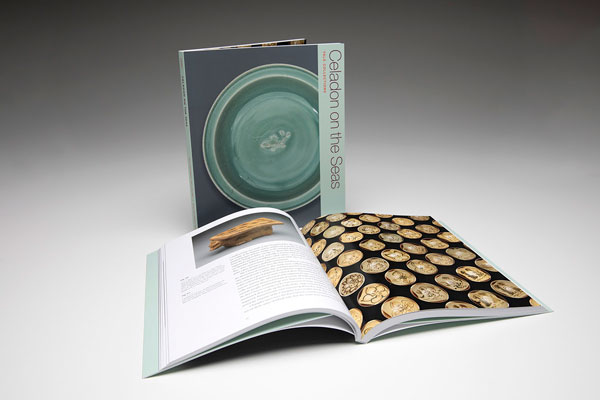
To celebrate this season’s Asia Week, we are offering a special promotion on our recently released title Celadon on the Seas: Chinese Ceramics from the 9th to the 14th Century. Beautifully illustrated and engagingly written, this publication explores the development of the southern Chinese ceramic industry from the ninth to the fourteenth century. Drawing on our Collection, it examines the artistic, historical, and technical aspects of dozens of ceramic objects, offering an overview of the industry and its unique relationship to maritime trade.
To learn more and purchase your copy, click here.
Asian Art from the Permanent Collection
The Gallery’s Chinese and Japanese collections were built initially through the gifts and bequest of Mrs. William H. Moore between 1937 and 1960. The greatest strengths of the Chinese holdings are ceramics and paintings, including a group of vessels from the Changsha region of Hunan Province, from around 500 B.C.E. to 1000 C.E., assembled for the most part by John Hadley Cox, B.A. 1935. Chinese paintings range from the Tang dynasty (618–907 C.E.) through the 20th century, with particular strengths in the 17th century and in the modern and contemporary period.
The Japanese collection has important concentrations in the arts of the Edo period (1615–1868). Approximately 1,200 prints, the majority of which are ukiyo-e prints of the 18th and 19th centuries, demonstrate the breadth of this medium, and recent additions have included a group of 20th-century prints. Several important screens and hanging scrolls of the 14th through 18th century highlight the department’s holdings of Japanese painting and calligraphy, while Japanese textiles are represented by fragments from the Shōsōin repository in Nara, Noh robes, kimonos, and a collection of Buddhist priests’ robes. Japanese ceramics, a growing area of the collection, span from the Neolithic period to the presend day, with important recent additions of contemporary ceramic sculpture.
The South Asian and Islamic collections, again founded by the gifts of Mrs. Moore, are represented by an excellent group of textiles, ceramics, miniature paintings, and manuscript pages. Gifts of over 80 Persian and Indian miniature paintings, and others of Indian sculpture, have greatly augmented the holdings of Iranian and Indian art.
To view highlights in the collection, click here.