NEWS
A Partnership in Himalayan Art
From 2026 to 2031, the Seattle Asian Art Museum is displaying rare works on long-term loan from the Rubin Museum of Himalayan Art in several of its collection galleries. The Rubin’s collection-sharing program expands access to Himalayan art in other museums. Partnerships like the one between the Rubin and Seattle Asian Art Museum enable more people to learn about the art and cultures of the Himalayas, the Tibetan Plateau, and Inner Asia, as well as the importance of these regions in the transmission of art, technology, and religious traditions in Asia.
Over the next five years, works from the Rubin Museum integrated into Boundless: Stories of Asian Art, the thematic installation of our renowned collection of Asian art.
To learn more, click here.
Current Exhibitions at Seattle Asian Art Museum

Reflection: TK “Self-Portraits”, 2010, Kondō Takahiro, Japanese, b. 1958, molded and cast porcelain, pit-fired with black “Silver Mist” glaze; made at the Tenkawa Daibenzaiten Shrine, Yoshino, Nara Prefecture, each 9 1/2 × 6 7/8 × 9 1/2 in., Collection of Carol and Jeffrey Horvitz, photos: Richard P. Goodbody and John Morgan.
The Kondō Family: Storytellers in Clay
July 15, 2026 – January 3, 2027
Seattle Asian Art Museum
The Kondō Family: Storytellers in Clay brings together works by four artists across three generations of one of Japan’s most influential artistic families: Kondō Yūzō (1902–1985), his sons Kondō Yutaka (1932–1983) and Kondō Hiroshi (1936–2012), and Hiroshi’s son Kondō Takahiro (b. 1958). The exhibition traces a century of practice within this single family lineage. It is presented in partnership with the Carol and Jeffrey Horvitz Collection, a major private collection of modern and contemporary Japanese ceramics.
The works are grounded in porcelain and sometsuke, a technique in which cobalt pigment is painted beneath a clear glaze and fired at high temperatures, creating a blue-and-white design. Named a Living National Treasure (ningen kokuhō) in 1977, Kondō Yūzō expanded this tradition beyond established pictorial and functional conventions. Later generations approached his legacy not as a template but as a point of departure. Across vessels and sculptural forms, each artist engages material, surface, and form in distinct ways, moving between function and nonfunction, continuity and change. For Kondō Takahiro, this inheritance extends into the present through works attentive to the power of nature and contemporary experiences. Together, these sixty works by four Kondō family artists offer a focused meditation on transmission, experimentation, and the enduring expressive capacity of clay.
Organized by SAM, this exhibition is based on Transcendent Clay/Kondo: A Century of Japanese Ceramic Art, originally presented by the Lowe Art Museum, University of Miami, and guest curated by Joe Earle.
To learn more, click here.
Boundless: Stories of Asian Art
February 8, 2020 – Ongoing
Asia can be defined in many ways, geographically, culturally, and historically. As the world’s largest and most populated continent, Asia is not uniform or fixed: its boundaries shift, its people and cultures are diverse, and its histories are complex. After a transformative renovation, the Seattle Asian Art Museum—one of only a few Asian art museums in the United States—reopens with a presentation that embraces this complexity. You will not find galleries labeled by geography. Instead, works from different cultures and from ancient to contemporary times come together to tell stories about Asia in a non-linear narrative.
The galleries are organized around 12 themes central to Asia’s arts and societies such as worship and celebration, visual arts and literature, and clothing and identity. The south galleries feature art inspired by spiritual life and the north galleries show art inspired by material life. Some objects relate to both the spiritual and material realms and are a testament to art’s layered meanings.
Each artwork tells its own story of when, where, how, and why it was made. But when seemingly disparate artworks are displayed together, meaningful connections and questions emerge. Explore our renowned collection and discover ideas across time and across Asia.
To learn more, click here.
Current Exhibitions at Seattle Art Museum
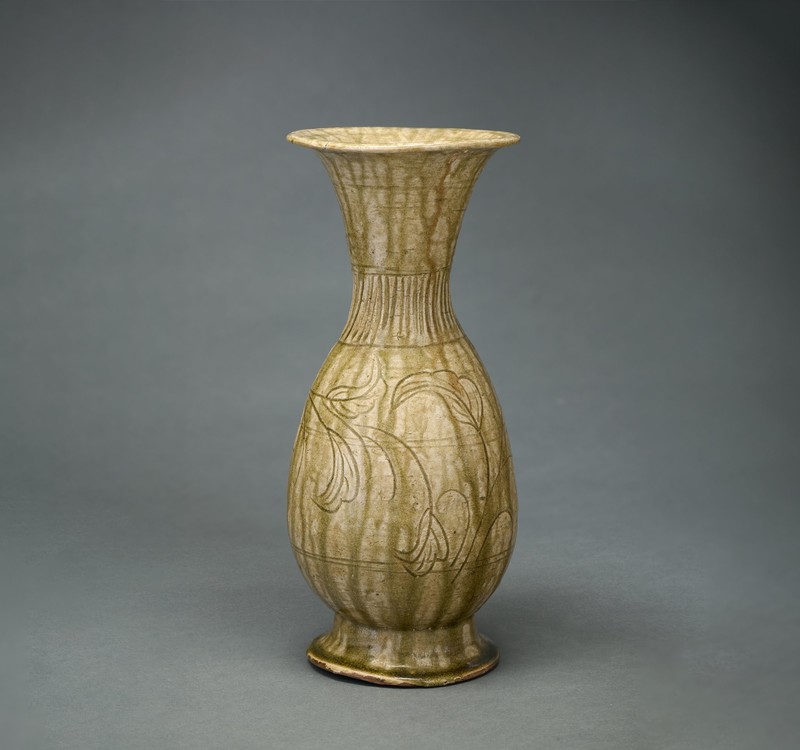
Vase, 13th-14th century, Porcelaneous stoneware with incised decoration and ash glaze (Seto ware), Japan, Kamakura period (1185–1333), Eugene Fuller Memorial Collection, 53.19. photo: Scott Leen
Ash-Glazed Ceramics from Korea and Japan
July 9, 2025 – Ongoing
This exhibition brings together 34 ceramic artworks featuring ash glaze, all drawn from the Seattle Art Museum’s remarkable holdings of Japanese and Korean art. Spanning time, place, and function, the selection includes ancient Korean funerary and ritual gray wares, ancient Japanese Sue and Sanage wares, early medieval Japanese Seto wares, and large storage jars from medieval and contemporary Japan.
Exchange with peoples of the southern Korean peninsula led to the introduction of a variety of advanced technologies to the Japanese islands during the Kofun period (ca. 250–538). In the realm of pottery, highly skilled Korean makers brought both knowledge of the potter’s wheel and the technical expertise needed to create a new type of kiln now commonly known by the Japanese term anagama.
Built into a hillside with a fire fueled by wood at the lower end and a flue at the higher end, the anagama kiln fires pottery at around 1200–1400 degrees centigrade (2200–2500 F). Prior to this in Japan, pottery was fired in open or partially open trench kilns, reaching only around 800 degrees centigrade. As in Korea, the higher firing temperature resulted in stronger vessels, which replaced lower-fired wares as the standard for ceremonial and ritual purposes after the 400s. This firing environment also led to the development of natural, or “accidental,” ash glazes, created when wood ash in the kiln collects on the vessels, creating a glaze that appears greenish-yellow to deep green, sandy to glossy, and dripping to charred. Ash glazes inspire artists around the world to this day.
To learn more, click here.
Chronicles of a Global East
October 20, 2022 – Ongoing
By land and by sea, the premodern global world was deeply interconnected. This exhibition narrates a few of the many stories related to the Silk Roads and maritime routes, where innumerable transnational artistic traditions emerged. A monumental deerskin map provides a commanding view of Tainan, a port city with Dutch-built fortresses and Chinese and indigenous residents. In a reversal of Chinoiserie, an imperial mirror shows Chinese palaces set within a pastoral European landscape. The blue-and-white ceramics on view recall Chinese porcelains but are in fact inventive Vietnamese commercial wares whose profitable path to market was interrupted after their transportation was shipwrecked. Each appropriation represents a claim of advantage—whether over strategic territory, in artistic and technological sophistication, or business innovation. Each also embodies curiosity, a desire for new knowledge through borrowing from the unfamiliar “other.”
This exhibition is made possible by:
Taiwan Studies Arts & Culture Program, University of Washington
University of Washington East Asia Center
Lucie Tuan In honor of Yuyann Hu and Enlei Tuan
To learn more, click here.
Porcelain Room
Ongoing
Vast quantities of translucent, elegantly decorated white-bodied porcelain from China and Japan, arriving in Europe in the seventeenth and early eighteenth centuries, heightened Europeans’ fervor for these wondrous wares. In royal palaces, great houses of the aristocracy, and homes of the rising merchant class made wealthy by trade, specially designed rooms showcased porcelain from floor to ceiling as crowning jewels in an integrated architectural and decorative scheme.
Brimming with more than one thousand magnificent European and Asian pieces from SAM’s collection, the Porcelain Room has been conceived to blend visual excitement with an historical concept. Rather than the standard museum installation arranged by nationality, manufactory, and date, our porcelain is grouped by color and theme. Today, when porcelain is everywhere in our daily lives, this room evokes a time when it was a treasured trade commodity—sometimes rivaling the value of gold—that served as a cultural, technological, and artistic interchange between the East and the West.
Some of the works on view in the Porcelain Room date back to the 17th century, but this beloved gallery at SAM has stepped into the 21st century with digital kiosks located at both entrances of the Porcelain Room. Use the interactive experience to gain a brief history of porcelain, zoom in on each of the artworks for a closer look, and read caption information, including the type of object, date, and origin.
To learn more, click here.
Current Exhibitions at Seattle Olympic Sculpture Park

Water Lilies, 2022, Ai Weiwei, Chinese, b. 1957, LEGO bricks, 105 1/2 x 602 3/4 in., Courtesy of Ai Weiwei Studio and neugerriemschneider, Berlin, © Ai Weiwei, photo: Marjorie Brunet Plaza.
Ai Weiwei: Circle of Animals/Zodiac Heads (Bronze)
March 7, 2026 – October 24, 2027
Olympic Sculpture Park, North Terrace
Standing over 10 feet tall and weighing over 1,500 pounds per piece, Ai Weiwei’s Circle of Animals/Zodiac Heads (Bronze) (2010) consists of 12 zodiac head sculptures. These remarkable works will be installed in the Ackerley Meadow, an area of the sculpture park just outside of the PACCAR Pavilion. They will be arranged in an arcing semi-circle and in order of the traditional Chinese zodiac cycle: Rat, Ox, Tiger, Rabbit, Dragon, Snake, Horse, Ram, Monkey, Rooster, Dog, and Boar. Visitors can get up close and walk among the sculptures.
The works reconceive 12 zodiac heads that once decorated an 18th-century Qing imperial fountain before they were looted during the Second Opium War (1856–1860). Seven are based on the original heads that have survived, and Ai researched and reimagined the five animals still missing to complete the zodiac. This work embodies Ai’s long engagement with questioning the tendency to value the real over the fake and the original over the copy.
Circle of Animals/Zodiac Heads (Bronze) will be on view along with 22 monumental sculptures throughout the Olympic Sculpture Park, including The Eagle (1971) by Alexander Calder, Wake (2002–03) by Richard Serra, and Seattle Cloud Cover (2006) by Teresita Fernández. Seattle’s largest green space, the nine-acre sculpture park is free and open daily from 30 minutes before sunrise to 30 minutes after sunset.
To learn more, click here.
Qiu Zhijie: Map of the History of Science and Technology
January 28, 2026 – January 31, 2029
Olympic Sculpture Park
For the Seattle Art Museum’s Olympic Sculpture Park, the artist designed a Map of the History of Science and Technology. In this project, Qiu interweaves scientific and technical advancements in Asia and the West from ancient to contemporary times. The map calls out the discovery of bronze and iron, the invention of the wheel, the abacus and mathematical and scientific theorems, the plow, celadon ware, Roman cement, paper making, feats of engineering across the globe, as well as the bicycle, photography, acupuncture, the flush toilet, and more. The map traces the interconnectedness of ideas that have shaped the course of history across the globe.
Born in 1969 in Zhangzhou, Fujian Province, China, Qiu Zhijie is a leading figure in conceptual art and new media. Trained in traditional calligraphy, he is celebrated for imaginary maps in which he turns milestone developments in philosophy, sociology, art, culture, and science into topographic equivalents of a memory palace. Initially creating works small in scale, he gradually adapted the format to large-scale wall installations.
Graduating from the Department of Printmaking at the Zhejiang Academy of Arts (now China Academy of Art), Hangzhou, Zhejiang Province, in 1992, Qiu was instrumental in developing the school’s Department of Intermedia Arts. Since 2024, Qiu has served as the President of the Tianjin Academy of Fine Arts.
To learn more, click here.