NEW EXHIBITION
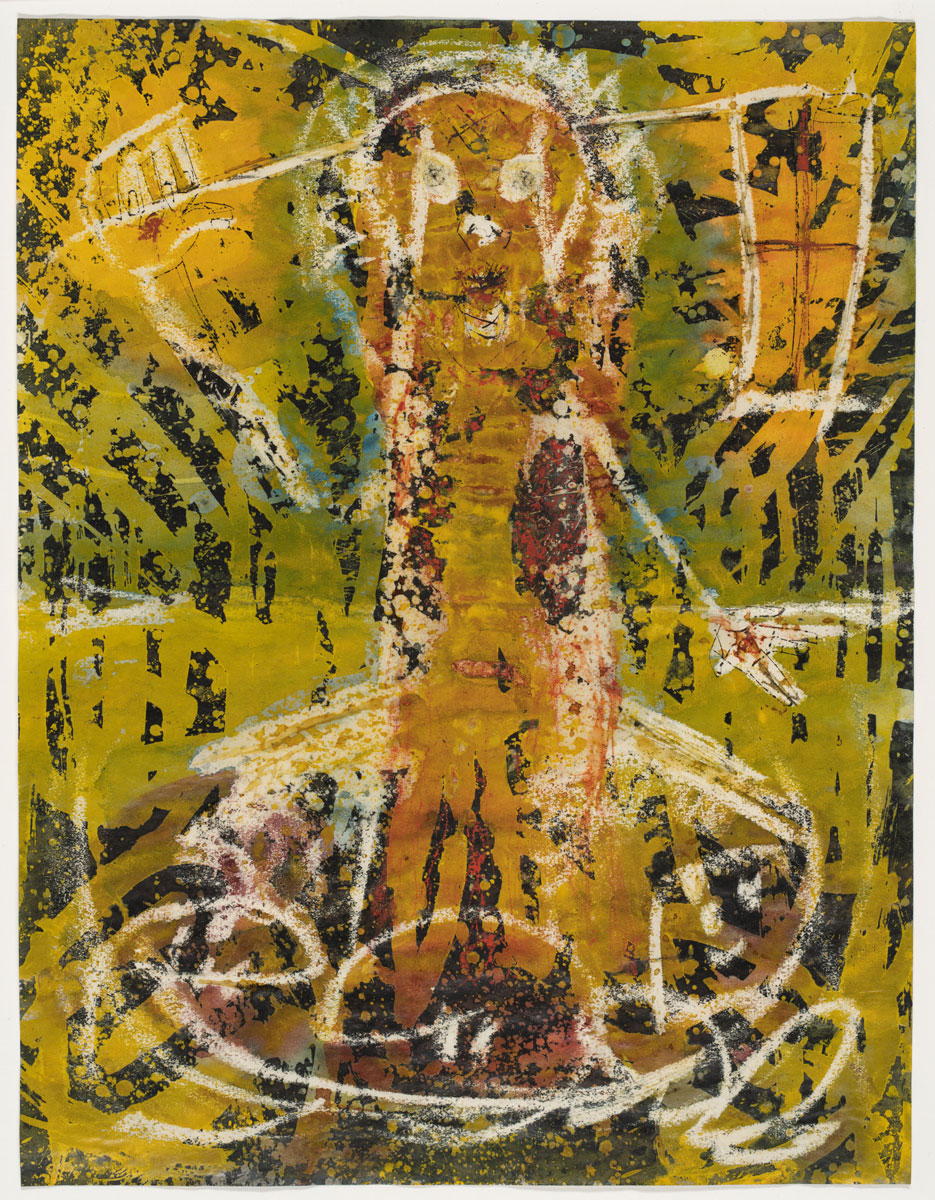
Alfonso Ossorio, Christ in Limbo, 1950. Watercolor, black ink, and wax on white wove paper. Harvard Art Museums/Fogg Museum, Gift of Frederic and Siena Ossorio, 2004.21. © Robert U. Ossorio Foundation.
Alfonso Ossorio: Line and Lineage
October 23, 2026 – April 11, 2027
Related Tours and Talks: Oct 28, Nov 4, 5, 18, Dec 9, Mar 3, Apr 6 & 9
Modern and Contemporary Art, Harvard Art Museums
Through a focused selection of works and archival materials, Alfonso Ossorio: Line and Lineage explores the recurrent subjects, material experimentation, and development of line in prints, drawings, and wax-resist paintings by Alfonso Ossorio (1916–1990). Born in the Philippines, Ossorio studied art history at Harvard and shortly after moved to New York City, becoming an influential figure in the post–World War II American avant-garde. Showcasing works that chart both continuities and innovations across his six-decade practice, the exhibition positions Ossorio in dialogue with the artists he influenced, learned from, and inspired.
The exhibition is organized in conjunction with Knowledge Is Myth: Chimeric Continuities (October 1–December 13, 2026) at the neighboring Carpenter Center for the Visual Arts. Works by Ossorio as well as by Enzo Camacho and Ami Lien, a contemporary artist duo who engage with the continuing influence of a larger-than-life church mural that Ossorio completed in the Philippines, appear in both exhibitions.
Programming, including talks led by exhibition curators, will be hosted by both the Harvard Art Museums and the Carpenter Center throughout the run of the exhibitions.
Alfonso Ossorio: Line and Lineage is accompanied by a publication featuring two essays with new scholarship on Ossorio’s works on paper and a conversation with contemporary artists Enzo Camacho and Ami Lien.
Organized by Mitra Abbaspour, Houghton Curator and Head of the Division of Modern and Contemporary Art, and Ally Cirelli, Cunningham Senior Curatorial Assistant for the Collection, Harvard Art Museums.
To learn more, click here.
CURRENT EXHIBITIONS & DISPLAYS
Animal Power
October 22, 2025 – October 21, 2026
Galleres 2550 & 2590
This is an exploration of the diverse range of animal representations in a recent installation in our Islamic and South Asian art galleries, including their symbolic meanings and cultural significance. On view in the Islamic art gallery (2550) are a 16th-century Persian carpet depicting hunting animals, a selection of ceramic and metal sculptural objects, often serving functional purposes, from 13th- and 19th-century Iran, and contemporary glass birds by Turkish artist Felekşan Onar. The display in the South Asian art gallery (2590) includes a devotional painting showing animal mounts of Hindu deities, 18th-19th century, a textile featuring Hindu mythical animals in an ogival lattice design from the Islamic world, c. 1700, and a Gujarati embroidery with rainbow-colored birds, 15th century.

Bingyi 冰逸, The Eternal Pond of the Universe 不朽的池塘, 2022-2024, ink on paper, 694 x 576 cm (273 1/4 x 226 3/4 in.). Photo © President and Fellows of Harvard College
The Eternal Pond of the Universe 不朽的池塘
Through August 1, 2027
LL and 1st Floor
During an extended stay in New England in the winter of 2021–22, painter and Chinese art scholar Bingyi 冰逸 visited Walden Pond every day, photo-graphing incremental changes in the environment and collecting local plants like grasses and ferns. While preparing this composition, she was inspired by Henry David Thoreau’s writings and also drew on her extensive knowledge of Song dynasty (906–1279) monumental landscape painting.
Dwarpalika (Temple Guardian)
New Acquisition
Gallery 2620
Nepali artist Sneha Shrestha (also known as IMAGINE) infuses ancient architectural traditions with her distinctive street art style. “Dwarpalika” refers to the formidable female guardians that are placed outside temples for protection. The form of this work, however, derives from Newari ankhi jhyal (“eye windows”): ornamental wooden lattice windows found in architecture of the Kathmandu Valley in Nepal. Their wood is replaced here with metal, evoking the brilliant shine and eventual patina of brass and gilt bronze Hindu and Buddhist icons. The lattice repeats the first letter of the Devanagari script used to write the Nepali language, ka क, which for the artist carries comfort, familiarity, and memories of home.
Standing Male Haniwa in Ceremonial Dress
Ongoing
Calderwood Courtyard
Haniwa 埴輪 (clay cylinder) refers to a type of funerary object that was set into the ground atop massive keyhole-shaped burial mounds called kofun 古墳 during Japan’s Kofun period (c. 250–600). Created from slabs or coils of clay, haniwa started as simple cylinders but later depicted people, animals, and structures. Recent treatment focused on refining stubborn restoration materials and better integrating mis-aligned fragments to bring repairs into closer visual balance with the original material, unifying the sculpture while also keeping its history legible.

Eleven-Headed Guanyin, China, Northern Song dynasty, dated to 985 CE. Reportedly from the Mogao Cave Temples, Dunhuang, Gansu province. Hanging scroll; ink and color on silk. Harvard Art Museums/Arthur M. Sackler Museum, Bequest of Grenville L. Winthrop, 1943.57.14
The Mogao Cave Temples in Dunhuang
Ongoing
Later Buddhist Art Gallery
Introduced to China in the first century, Buddhism promised its adherents ultimate escape from existential suffering. It also offered ritual techniques for achieving present-world benefits, such as military victory and relief from disease. Treating both immediate and ultimate ills, Buddhism was already flourishing in China by the fourth and fifth centuries, when it was transmitted to Korea and Japan. By the seventh century, with the advent of the Tang dynasty (618–907), the era of China’s greatest openness to the Central Asian cultures of the Silk Road, Buddhism became the de facto state religion, receiving patronage from all social classes. As the mural fragments and sculptures on display in this gallery demonstrate, Chinese Buddhist art reached its peak of grace and refinement in this period.
While early East Asian Buddhists primarily worshipped the historical Buddha Shakyamuni, later devotees turned their attention to the myriad buddhas (fully awakened beings) and bodhisattvas (awakened beings that choose, out of compassion, to remain in our world to alleviate the suffering of the unenlightened) of Mahayana Buddhism, leading to the production of ever more diverse images. The cults of bodhisattvas, such as Avalokiteshvara, and of Amitabha Buddha, whose Western Pure Land was a paradise that offered the ideal conditions for attaining awakening, found particular favor. Through sophisticated combinations of architecture, painting, sculpture, metalwork, and even garden design, worshippers throughout East Asia sought to create virtual Pure Lands within the spaces of their temples—a phenomenon attested to by the Japanese Heian (794–1185) and Kamakura period (1185–1333) works on display in this gallery.
The Collections
To view our collections from The Harvard Art Museums — the Fogg, Busch-Reisinger, and Arthur M. Sackler Museums, click here.